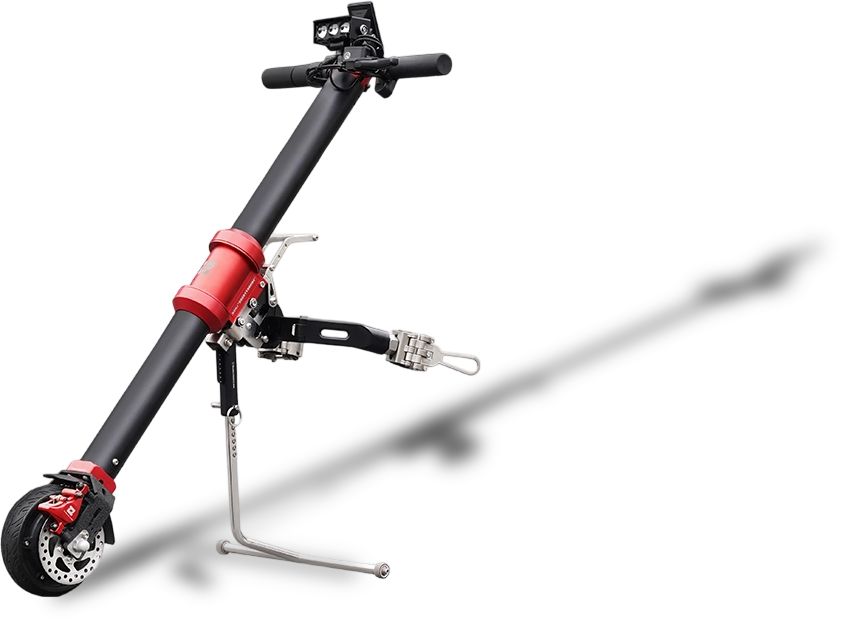
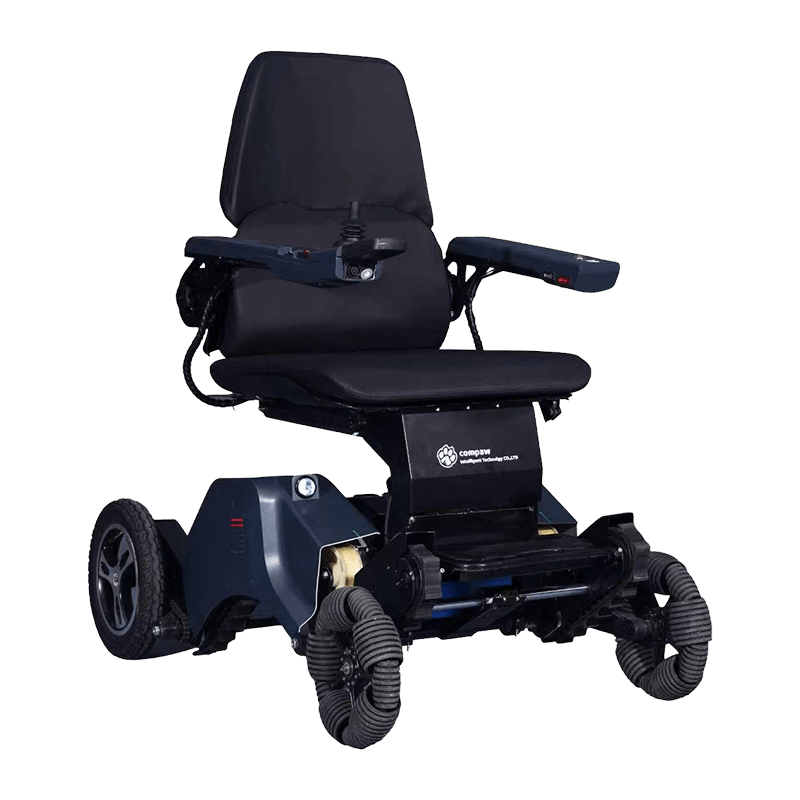
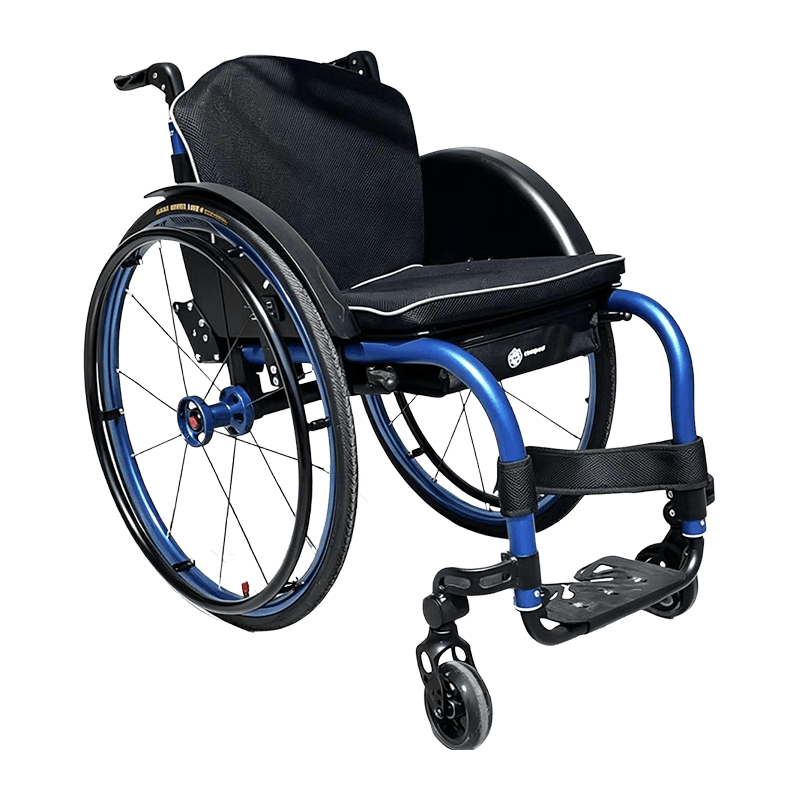
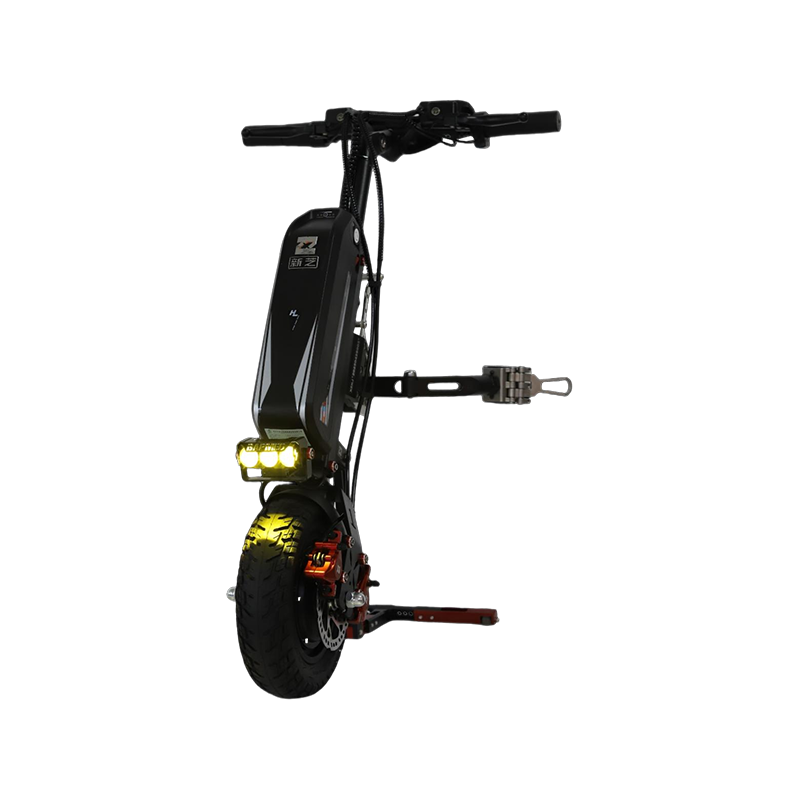
COMPAW designs and manufactures electric powered stair climbers, stair-climbing wheel chairs and related accessible mobility equipment at our Suzhou, Jiangsu production base. As Custom Electric Powered Stair Climber Manufacturers, Factory, we supply distributors, nursing home operators, hospital rehabilitation departments and community accessibility programmes that need controlled vertical transport inside existing buildings.
Our manufacturing core carries 25 years of mature production experience, a 50,000㎡ modern factory, more than 300 employees and a 100-ton production capacity. Over 70% of our output is exported worldwide, and our product matrix also covers wheelchair power assist heads under the SlimTough, NeoPath, Zepath, ProPath and OmniPath programmes, multi-functional wheelchairs and companion rehabilitation aids.
What We Supply in This Category
Stair climbing equipment is not one machine. We build the climbing element, drive package and attendant interface around the staircase it has to work on, which is why the range splits into distinct mechanical families.
- Tracked stair-climbing wheelchairs — a continuous track lays onto the stair nosing for steady, low-impact movement on straight flights, including narrow residential staircases.
- Wheeled stair-climbing wheelchairs — paired wheel or arm clusters step from tread to tread, which suits flights with landings and gives more manoeuvring freedom at the top and bottom.
- Nursing stair climbers — attendant-operated units that carry a passenger between floors while reducing the lifting and carrying load on care staff.
- Electric powered stair climbers — motorised climbing with an attendant control interface, used where a passenger must remain seated and the operator needs predictable speed and braking control.
Alongside the climbers we supply a wider accessible mobility machine range, including manual and electric wheelchairs, patient transfer aids, walking aids and dedicated stair-climbing wheel chair models, so a facility can standardise on one supply channel.
Range and Application Fit
| Configuration |
Stair Interface |
Typical Application |
Configuration Focus |
| Tracked stair-climbing wheelchair |
Continuous track |
Residential buildings, older housing stock, straight flights |
Track width, nosing protection, descent brake behaviour |
| Wheeled stair-climbing wheelchair |
Wheel or arm cluster |
Flights with landings, hospital and clinic transfers |
Step pitch, seat recline, turning clearance on landings |
| Nursing stair climber |
Attendant-steered climbing frame |
Nursing homes, home-based elderly care, rehabilitation centres |
Attendant handle position, restraint layout, weight distribution |
| Electric powered stair climber |
Motorised climb with powered descent |
Multi-level facilities, rental fleets, community service stations |
Battery capacity, control interface, status monitoring |
Matching the Climber to the Building
Load capacity, stair dimensions, climbing angle and battery performance are the four variables that decide the mechanical family, and they interact with each other. A steep, short flight and a long shallow flight can look similar on site but need different motor and braking behaviour.
- Rise and going of each step, plus total flight length and number of steps
- Climbing angle and whether flights are straight, winding or broken by landings
- Stair surface and nosing condition — tile, stone, timber, concrete or metal edge trim
- Passenger weight range and whether the occupant transfers or stays seated
- Clearance at the top and bottom landing, door widths and corridor turning radius
- Storage position between trips and the availability of a charging socket
For curved or spiral staircases we normally review the geometry before confirming a configuration, because track contact and wheel pitch cannot both be assumed from a photograph.
Drive, Battery and Control Architecture
The climbing element is driven through a gear motor package sized to the working load and gradient, with braking integrated into the descent path rather than left to the operator. We confirm climb speed, descent speed limits, start-up ramps and emergency stopping behaviour with the customer before release, because these settings differ between a nursing home and a rental fleet.
Control interfaces are kept deliberately simple: an attendant handle or pendant with forward, reverse and speed control, plus visible battery state and fault indication. Battery packs are removable on the models that need it, so a fleet can swap packs between shifts instead of taking a unit out of service for charging.
- Motor and gear ratio matched to gradient, payload and duty cycle
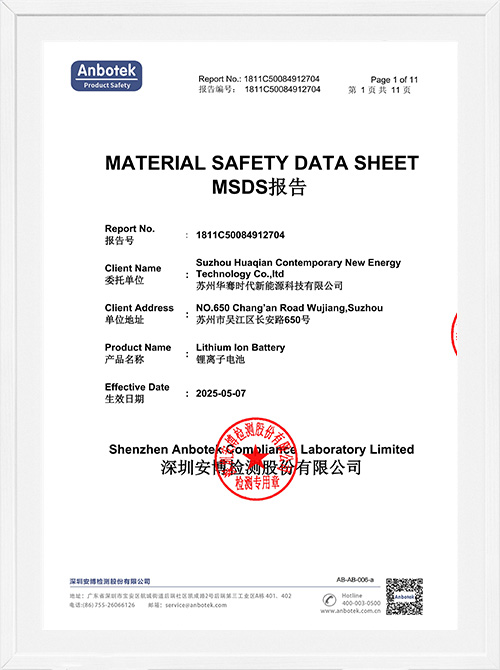
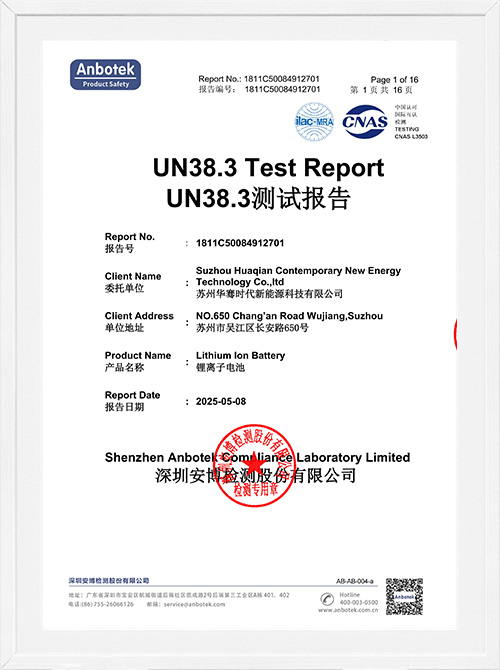
- Lithium battery options with charger type and charge-cycle documentation
- Mechanical braking plus motor-controlled descent for predictable stopping
- Fault indication, low-battery warning and key or code activation where required
- Optional status monitoring and remote lock for managed rental fleets
Materials, Structure and Operator Safety
Frames and load-bearing components are built in high-strength alloy with welded and bolted joints that can be inspected and re-torqued during service. Folding and quick-release mechanisms are used where a unit has to be moved or stored between journeys, and all pivot points are designed for routine re-lubrication.
Safety on a staircase is as much about the attendant as the passenger. Our configurations include restraint belts, anti-tip geometry, guarded track or wheel contact, an attendant grip that keeps hands clear of the climbing path, and a stop control reachable without releasing the handle.
Customisation and OEM/ODM Support
We run full-cycle OEM/ODM programmes from market concept to mass production, covering functional parameters, appearance design and interaction logic. For stair climbers this commonly means adapting the climbing control algorithm to a specific step geometry, integrating a different drive package, or developing an exclusive housing and colourway for a home-care or medical rehabilitation channel.
Our technical team joins the product definition stage, so a requested climbing behaviour, seat position or control layout is checked against the mechanical design before tooling is committed. Customers receive multilingual technical documentation and online troubleshooting material to help them support their own service network.
Quality Control and Acceptance
Production runs under full-process quality control against international manufacturing standards, from incoming alloy stock and motor assembly through to final functional testing. Our products are certified for the EU and North American markets, and we collaborate with customers on localised certification adaptation for other regions, including the Middle East.
Before dispatch, each unit passes the checks that determine whether it is safe to put on a staircase:
- Load test at the rated capacity with a documented result
- Climb, descent and emergency-stop function test
- Brake holding check on gradient and on the flat
- Battery charge, discharge and charger compatibility verification
- Control interface, fault indication and switch inspection
- Frame, weld, fastener torque and folding mechanism inspection
- Cosmetic inspection, accessory completeness and packaging check
Information We Use to Configure Your Solution
To return a workable configuration and quotation, we need the operating conditions rather than a model number. The checklist below is what our engineers work through with the customer, and it is the same data we keep in the equipment file.
- Stair drawings, photos or measured rise, going, angle and landing dimensions
- Passenger weight range and whether transfer is required
- Building type and operating environment: residential, nursing, hospital, community or rental
- Attendant arrangement and number of operators per shift
- Daily trip count, expected duty cycle and charging schedule
- Required control interface, language of labels and documentation language
- Market access requirements, certificate expectations and packaging or pallet format
- Private-label or OEM requirements for housing, colour, branding and user manual
Documentation, Training, Spare Parts and Service
Units ship with instruction manuals, maintenance schedules and spare part references. For nursing and rehabilitation customers we provide operator training, periodic technical inspection and equipment calibration so that the equipment stays operational rather than parked after the first fault.
Channel customers receive rapid spare parts supply, multilingual technical documentation and remote fault diagnosis, supported by an equipment management backend for rental operators that shows unit status, fault alerts and remote locking. On-site maintenance and usage guidance are available for care institutions and home-care programmes.
Related equipment in our catalogue includes tracked stair-climbing wheelchairs and attendant-operated nursing stair climbers for facilities that need more than one climbing format across different buildings.
Frequently Asked Questions
Can COMPAW supply both tracked and wheeled electric powered stair climbers?
Yes. Both climbing principles are in production, and we recommend one or the other after reviewing your staircase geometry, landing space and the way the unit will be operated. Tracked units suit straight flights with limited clearance; wheeled units suit flights broken by landings where manoeuvring matters.
What staircase data do you need before quoting?
Measured rise and going per step, climbing angle, flight length, landing dimensions, stair surface and nosing condition, plus the passenger weight range. Photos and simple sketches are enough to start, and we confirm the configuration once the geometry is verified.
How is descent controlled on your stair climbers?
Descent is managed by the drive and braking system rather than by the attendant's strength. Speed limits, start-up ramps and emergency stopping behaviour are set for the selected configuration and confirmed with the customer during the technical review.
Do you offer OEM or ODM development for stair climbing products?
We do. Our OEM/ODM programme covers functional parameters, appearance design, interaction logic, stair-climbing algorithm adaptation and intelligent drive system integration, with our technical team involved from the product definition stage.
What documentation and support comes with an export order?
Each unit is supplied with operator instructions, a maintenance schedule and spare part references, plus multilingual technical documentation for channel partners. Operator training, periodic inspection, calibration, remote diagnosis and on-site maintenance are available depending on the application.
Which markets do your certificates cover?
Our products are certified for the EU and North American markets, and we work with customers on localised certification adaptation for other regions so that market access requirements are addressed before shipment.

 English
 русский
 Español
 Deutsch