English
 русский
 Español
 Deutsch

Content
- 1 Where Power Attachments Sit in a Distributor's Range
- 2 Run a Compatibility Audit Before the First Order
- 3 Technical Criteria That Drive Reorder Rates
- 4 Battery, Transport and Market-Entry Documentation
- 5 Supplier Capacity, Quality Discipline and Spare Parts
- 6 Commercial Terms and After-Sales Architecture
- 7 A Weighted Scorecard for Shortlisting
- 8 Red Flags in Sample Evaluation
Manual wheelchairs still make up the bulk of most dealers' stock, and a fair share of their owners would rather add powered assistance than replace a chair that already fits. That preference has turned electric wheelchair power attachments into a distinct procurement line: part accessory, part drivetrain, part battery logistics problem. For distributors, the buying decision is not simply picking the model with more watts. It is deciding which retrofit systems will fit the widest slice of the installed chair base, clear customs without friction, and stay serviceable two or three years after the sale. The criteria below are the ones that separate a repeatable attachment programme from a shelf full of returns.
Where Power Attachments Sit in a Distributor's Range
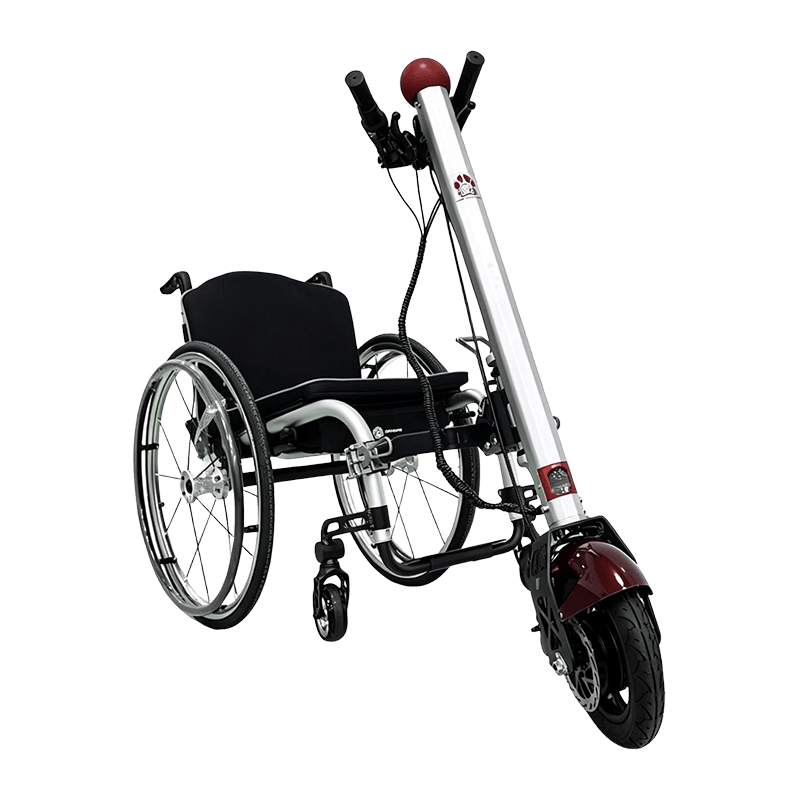
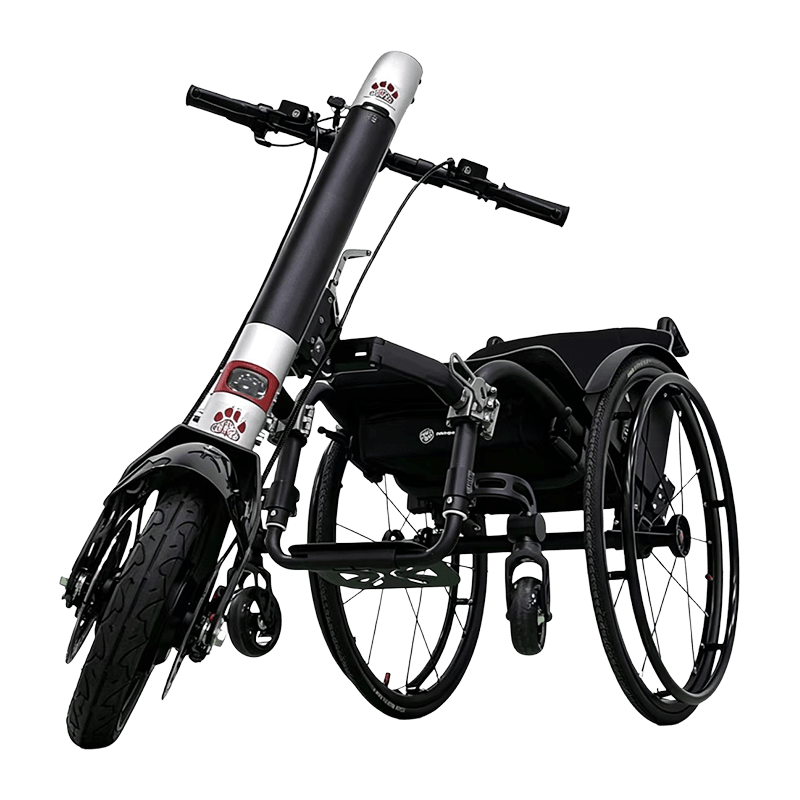
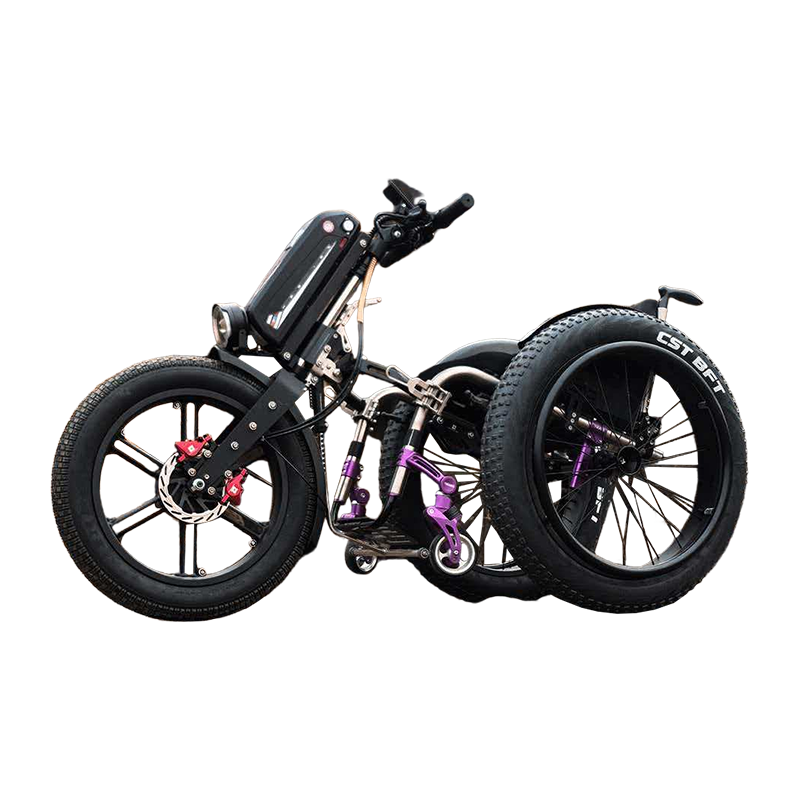
A power attachment is bought to extend the life of an existing manual wheelchair, so the family splits by use case rather than by price band. Front-mounted handcycle units convert a manual chair into a lever-steered, throttle-driven vehicle; all-terrain versions trade compactness for traction and clearance; portable units prioritise folding, weight and battery size for transport and travel. Each subtype answers a different customer conversation, and stocking two units that answer the same conversation usually costs more in staff training than it returns in choice.
| Customer segment | Attachment subtype | What procurement should verify |
|---|---|---|
| Urban daily use | Portable front-mounted unit | Fold time, packed weight, 100–240 V charger input |
| Suburban and rural routes | All-terrain unit | Torque at the wheel, tyre type, ground clearance |
| Dealer demo and rental fleets | Professional series | Mounting adaptability, serviceability, spares availability |
| Air travel and second homes | Travel-oriented unit | Battery below airline thresholds, test documentation |
Portable power attachments are often the entry point for a dealer testing demand, because they are easy to demonstrate in-store and cheap to ship compared with a complete powered chair.
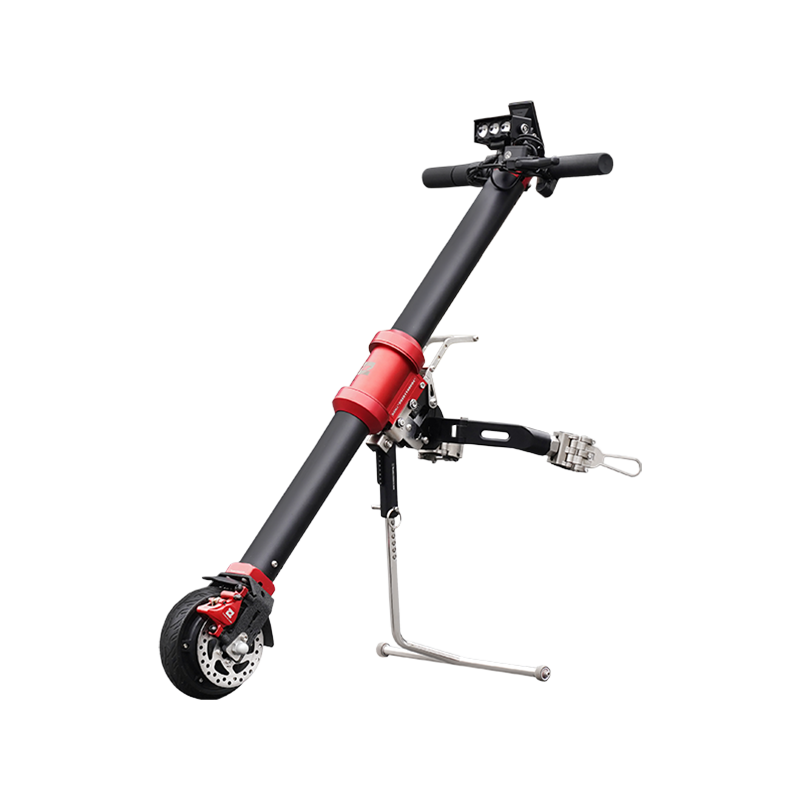
 SlimTough Portable Power Attachment for Manual WheelchairsAn ultra-light 10 kg quick-connect power attachment for flat-route daily mobility, suited to dealers testing portable demand before adding heavier models.View Product →
Once two or three SKUs are moving, distributors typically layer in a heavier-duty option and then review the complete power attachment and mobility range to check that accessories, chargers and mounting hardware are covered by the same supplier.
Run a Compatibility Audit Before the First Order
Most attachment returns are not caused by motor failure. They are caused by a bracket that does not clamp, a brake that fouls, or a user whose weight and seat geometry fall outside the design envelope. Ask for a compatibility matrix rather than a yes/no answer, and test it against the chairs you actually sell.
Frame architecture and mounting points
Tubular frame diameter, folding mechanism, cross-brace position and quick-release axle design all determine whether a clamp seats cleanly. Rigid frames and folding frames need different hardware, and some frames require an adapter plate that must be quoted as a separate line item. Confirm in writing whether the manufacturer treats frame modification as a warranty exclusion, because that conversation belongs at the point of sale, not after a failure.
Wheel, tyre and brake interface
Rear wheel sizes of 20, 22 and 24 inches, camber angles, handrim profiles and push-to-lock versus drum brakes all change how an attachment couples to the chair. The attachment's braking system must remain independent of the chair's own brake, and the parking lock must hold on a slope with the user seated.
User envelope
Maximum user weight, seat width range, centre of gravity and anti-tip requirements should be stated as numbers in the specification, not as marketing ranges. A unit rated for 100 kg with a battery and motor mounted forward will behave very differently from the same unit on a 60 kg user in a short-frame chair.
- Request the adapter and bracket list for every chair model you stock.
- Test fold, unfold and kerb approach with the chair loaded, not empty.
- Record installation time for one technician; anything above 20 minutes erodes margin.
- Confirm whether the chair can still be folded with the unit mounted.
Technical Criteria That Drive Reorder Rates
Specification sheets for power attachments are frequently written in the language of peak values. Distributors should read them as field-reliability documents, because every overstated number returns as a warranty claim handled by your own service desk.
| Criterion | What to verify | Why it matters to a distributor |
|---|---|---|
| Motor rating | Continuous versus peak wattage, gear ratio, thermal cut-off behaviour | Peak-only figures fail on sustained gradients |
| Speed control | Programmable speed profiles, regional restrictions, reverse mode | One SKU can serve markets with different rules |
| Battery pack | Watt-hours, cell chemistry, cycle life, removable design | Air freight eligibility and replacement revenue |
| Weight and folded envelope | Net unit weight, folded dimensions, lift points | Handling by carers and loading into vehicles |
| Ingress protection | IP rating for motor, controller and display | Warranty exposure in wet and coastal climates |
| Braking | Regenerative plus mechanical brake, parking lock, fail-safe behaviour | Central safety claim in tenders and audits |
| Controls | Throttle or lever type, display legibility, cruise function | User training burden and inbound support calls |
All-terrain configurations are usually the second unit a dealer adds, because they serve rural customers and mixed surfaces that a compact unit cannot handle confidently.
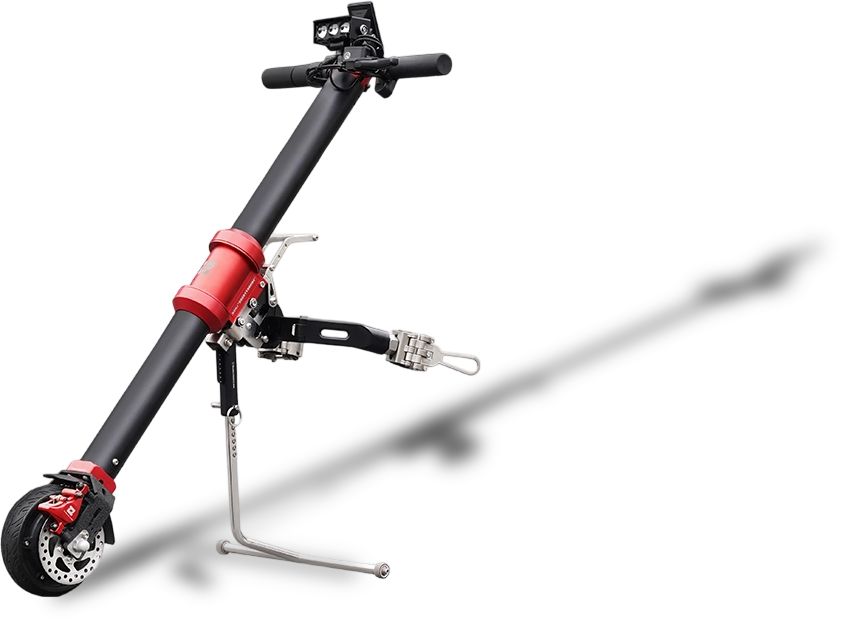
 NeoPath All-Round Electric Wheelchair Power AttachmentA balanced 48 V power attachment for everyday home, community and short suburban routes, bridging compact portable units and heavier all-terrain options.View Product →
Battery, Transport and Market-Entry Documentation
The battery is the part of an attachment that decides whether your container ships on schedule. Before a purchase order, request a UN 38.3 test summary, a safety data sheet, and an IEC 62133 report for the cell and pack. Confirm the watt-hour rating against the airline thresholds used for carry-on and checked luggage, because travellers are a real segment for portable units and a pack above the limit narrows the addressable market.
For market entry, assemble the file in one place: CE or UKCA declaration where applicable, the scope statement of the manufacturer's ISO 13485 quality system, labelling artwork, and user manuals in every language you intend to sell in. Where an attachment is marketed with rehabilitation claims, clarify whether the supplier positions it as a medical device or as a mobility accessory, since that distinction changes the paperwork you need at the border. A supplier that cannot send a test summary within a working day is a supplier that will cost you a shipment.
Supplier Capacity, Quality Discipline and Spare Parts
Retrofit products concentrate risk in small components: brackets, throttles, chargers, connectors and battery packs. That makes production scale and process discipline more relevant than catalogue breadth. A manufacturer with a long manufacturing history, a large plant and a defined output capacity is better placed to hold tolerances across repeat orders than a trading company assembling from mixed batches; the factory overview is the fastest way to check whether those numbers are real.
Ask specifically about incoming inspection of cells, burn-in or run-in testing before packing, dead-on-arrival rates over the last twelve months, and the field failure data the supplier is willing to share. Then define the spare parts kit in the contract: controller, throttle, charger, brake pads, mounting hardware and a bracket adapter for your most common chair. Warranty length matters less than warranty scope, so read the exclusions on batteries, water ingress and labour.
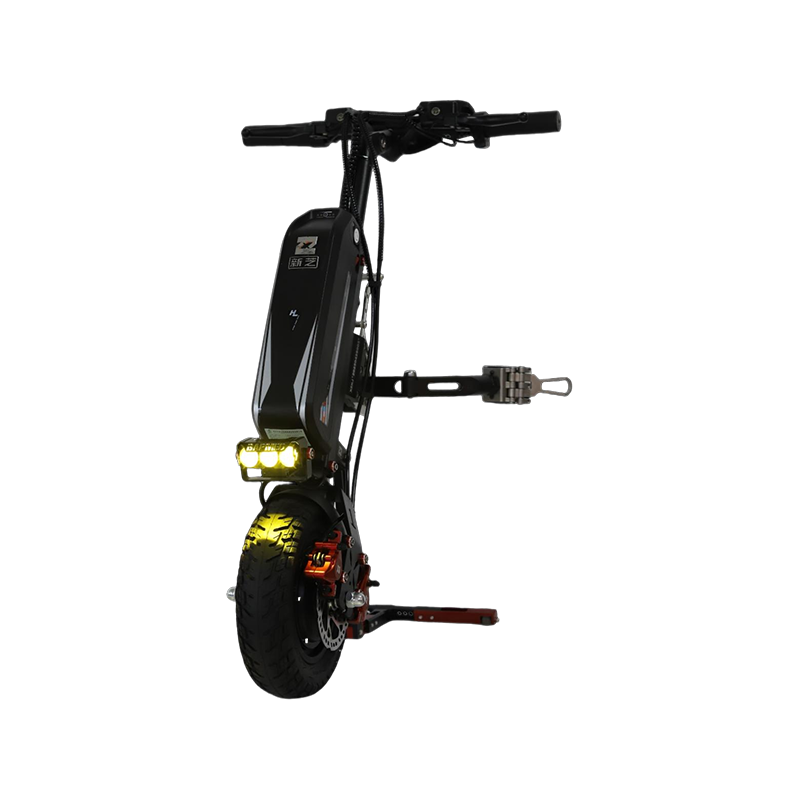
For buyers building a premium tier for high-mileage users and dealer fleets, a high-specification option such as the ProPath series can anchor the top of the range while a portable unit carries volume.
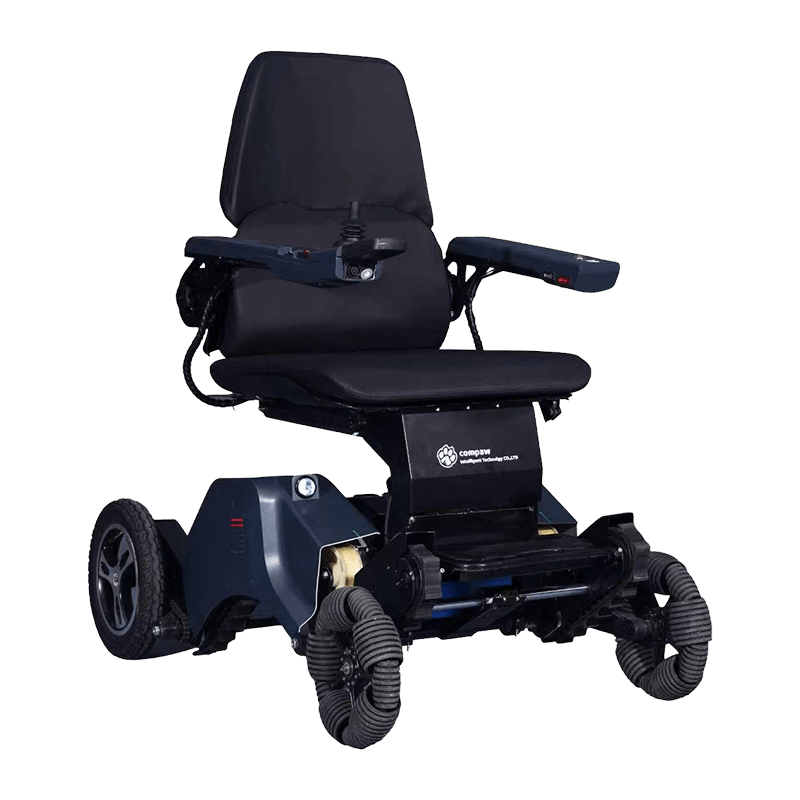
 ProPath Professional Heavy-Duty Electric Wheelchair Power AttachmentA heavy-duty 500 W attachment with long-range battery options and hydraulic brakes, positioned for high-mileage users, dealer fleets and premium range anchoring.View Product →
Commercial Terms and After-Sales Architecture
Attachments are rarely sold in container quantities on their own, so negotiate mixed loading with manual wheelchairs, stair climbers and daily living aids to reach a workable minimum order. Confirm Incoterms, price breaks at each quantity tier, packaging drop-test standards and whether the supplier will print your brand on the unit and the carton.
On after-sales, agree the mechanics before the first shipment: who pays freight on a warranty replacement, what failure evidence is required, how many spare parts are included per hundred units, and whether technical training is delivered on site, online or through recorded material. A 2 to 3 percent spare parts allowance is a common starting point, but the right figure depends on how intensively your customers use the product. Finally, request the marketing pack — photography, installation video and specification sheet in your language — because dealer training material is part of the product you are buying.
A Weighted Scorecard for Shortlisting
Score every candidate on the same sheet and let the weights force the trade-offs into the open. A practical weighting for a distributor launching an attachment line looks like this:
| Criterion | Weight | Evidence to request |
|---|---|---|
| Compatibility coverage | 25% | Compatibility matrix and adapter list for your chair models |
| Drivetrain performance | 20% | Hill-start and range data under stated load conditions |
| Compliance documentation | 15% | UN 38.3, IEC 62133, CE or UKCA, ISO 13485 scope |
| Manufacturing and QC | 15% | Factory audit notes, burn-in records, DOA statistics |
| Spare parts and service | 15% | Parts list, warranty terms, RMA process |
| Commercial terms | 10% | MOQ, Incoterms, price tiers, packaging specification |
Red Flags in Sample Evaluation
Most weak suppliers reveal themselves during sampling rather than after delivery. Watch for these signals:
- No compatibility matrix, only a statement that the unit fits "most wheelchairs".
- Motor output quoted as a single peak figure with no continuous rating.
- Battery chemistry and cell supplier left unspecified.
- No spare parts list, or a list without prices.
- Warranty that excludes batteries, water ingress and all labour.
- Manuals available in one language only, with no plan for the rest.
- No field failure data and no willingness to discuss it.
Procurement of electric wheelchair power attachments rewards distributors who treat it as an engineering and logistics decision rather than a catalogue decision. Compatibility coverage determines how many customers you can serve, documentation decides how quickly stock clears borders, drivetrain honesty decides how often your service desk hears from users, and spare parts discipline decides whether the category stays profitable in year three. Score the shortlist, pilot with a small order, and measure installation time and return rate before committing to a full range.