English
 русский
 Español
 Deutsch

Content
- 1 Complete Weight Comes Before Frame Material
- 2 Aluminum, Titanium and Steel Compared on the Deciding Facts
- 3 Aluminum Frames: The Default for Fleets and Volume Orders
- 4 Titanium Frames: Where the Premium Earns Its Place
- 5 Configuration Choices That Move Weight, Fit and Handling
- 6 What to Verify Before the Purchase Order Is Signed
- 7 Buyer Questions That Decide the Order
Two manual wheelchairs can match on a 12 kg specification sheet and still behave nothing alike on a 1:12 ramp or in the back of a compact car. What separates them is not the number printed in the brochure but how that number was built: which alloy carries the load, how far the rear axle sits behind the backrest, and which components the buyer agreed to keep removable. Buyers who treat frame material, complete weight and configuration as three separate decisions end up correcting one of them after the first delivery.
Complete Weight Comes Before Frame Material
Complete weight, measured with wheels, casters, upholstery, footrests and fixed accessories fitted, is the figure that decides handling, and for adult manual wheelchairs it typically lands between 9 kg and 18 kg depending on material and configuration.
Suppliers quote frame weight because it flatters the brochure. A bare chassis may read 7 kg while the chair a user actually lifts into a vehicle weighs 12 kg once 24-inch rear wheels, a cushion and footrests are mounted. When two quotations arrive, confirm they use the same measurement basis before you compare the numbers at all.
Definition: frame weight is the bare chassis, without wheels, upholstery or footrests. Complete weight is what the user or caregiver lifts into a vehicle, and it is the figure to hold a supplier to when quotations are compared side by side.
Aluminum, Titanium and Steel Compared on the Deciding Facts
Material density separates the three options before any design work begins: aluminum alloys sit near 2.70 g per cubic centimeter, titanium near 4.43 and steel near 7.85, so a frame of identical wall thickness cannot weigh the same in all three.
The comparison below translates those constants into what a buyer actually signs off on.
| Criterion | Aluminum alloy | Titanium alloy | Chromoly steel |
| Complete weight band | 11 to 13 kg | 9 to 11 kg | 15 to 18 kg |
| Material density | 2.70 g per cubic centimeter | 4.43 g per cubic centimeter | 7.85 g per cubic centimeter |
| Tube and joint approach | 6061-T6 or 7005 welded tube | Grade 9 seamless tube, welded | Thin-wall chromoly, welded |
| Surface finish | Powder coat or anodized | Bare brushed metal | Paint or powder coat |
| Repair in the field | Local welding available | Specialist welding required | Local welding available |
| Cost position | Baseline | Premium | Below aluminum at equal stiffness |
| Strongest fit | Fleet and volume orders | Single-user chairs in daily use | Budget and heavy-duty frames |
Aluminum Frames: The Default for Fleets and Volume Orders
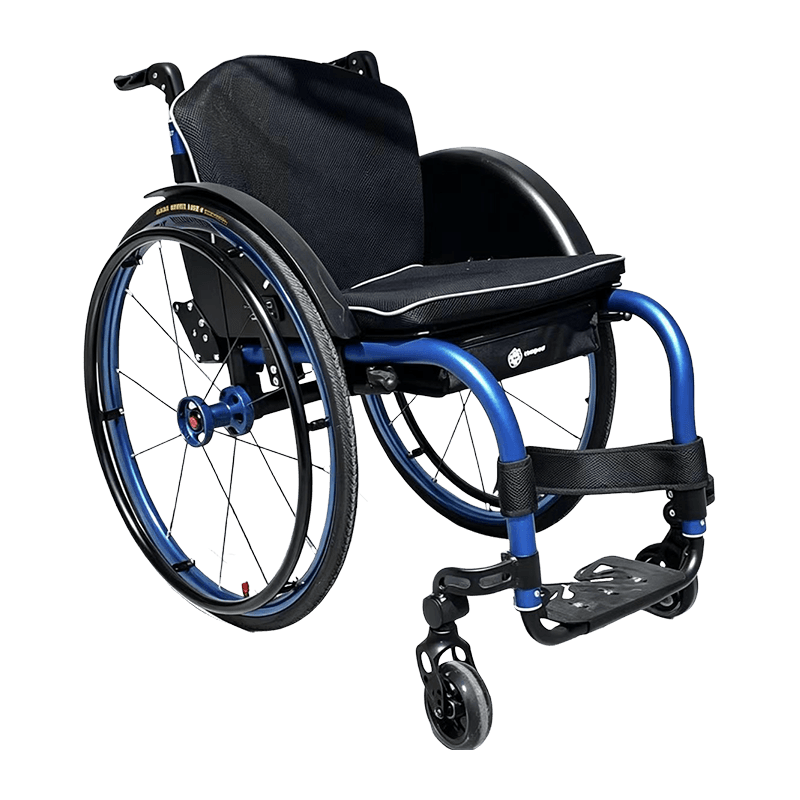
Aluminum suits buyers ordering a batch rather than a single chair, because welded 6061-T6 and 7005 frames keep complete weight in the 11 to 13 kg band while staying repairable by a competent local welder.
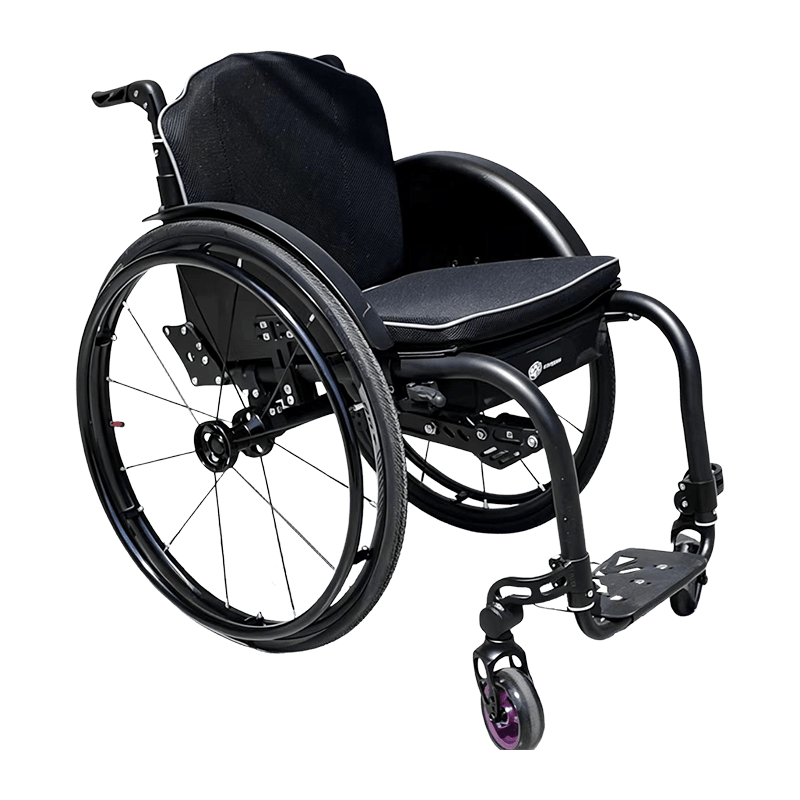 Lightweight 6061 Aluminum Self-Propelled Manual WheelchairA 7 kg 6061 aluminum self-propelled chair with adjustable footrests, 120 kg capacity, and configurable seating for batch buyers weighing welded-frame repairability.View Product →
The practical difference between the two alloys is heat treatment. 6061-T6 is welded and aged in a controlled cycle, while 7005 reaches strength through artificial ageing after welding and tolerates less uncontrolled heat input at the joint. The question worth putting to a supplier is not which alloy reads better on paper but which weld procedure is documented and repeatable across the production run.
Wall thickness in the 1.5 mm to 2.0 mm range is common on adult aluminum chairs. Thin walls cut weight and raise the risk of denting at the cross-brace; thick walls add durability and lifting strain. Inspect the seat rail joint and the caster housing first, because both absorb repeated impact from curbs and car boots.
Titanium Frames: Where the Premium Earns Its Place
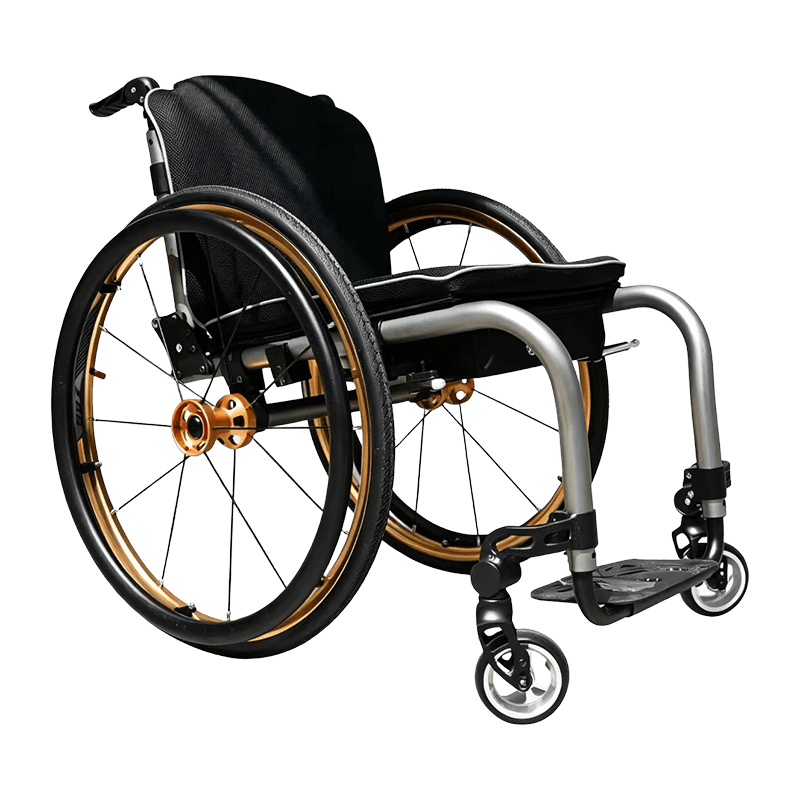
Titanium earns its cost on a single-user chair used daily for five years or more, where a complete weight of 9 to 11 kg and an unpainted surface reduce both lifting strain and finish wear.
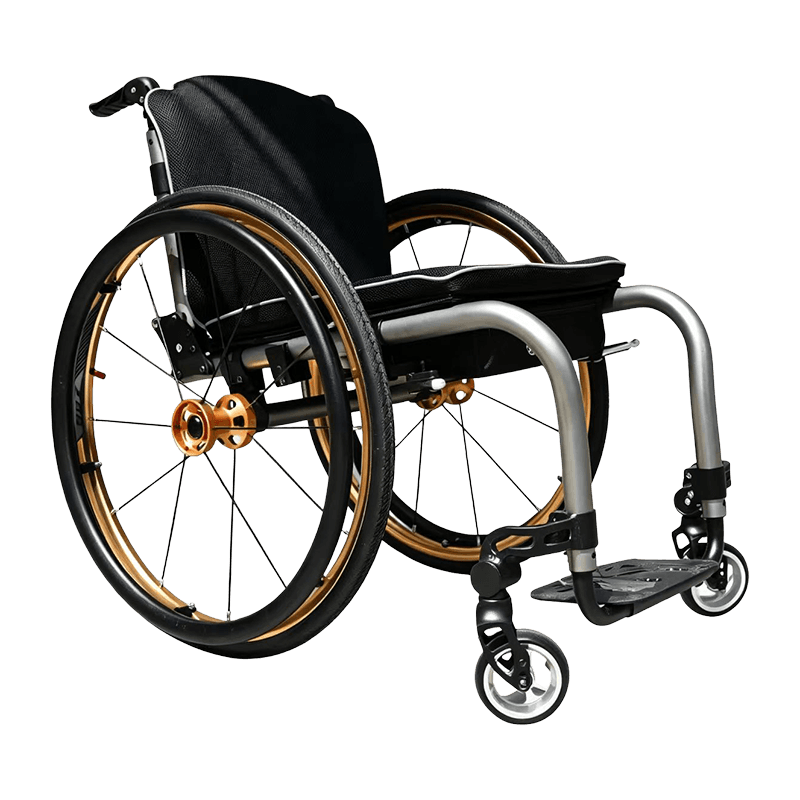 Lightweight TC4 Titanium Self-Propelled Manual WheelchairA 7.2 kg TC4 titanium self-propelled chair with adjustable footrests and 120 kg capacity, for daily single-user use where low weight and finish wear matter.View Product →
Grade 9 tube, also written 3Al-2.5V, is the usual choice for wheelchair frames: it welds cleanly, keeps fatigue strength at the joint and needs no coating, so a scratch does not become a corrosion site the way chipped paint can on steel. The trade-offs are real. Titanium costs more per chair, needs a specialist for weld repair, and carries a longer lead time than aluminum of the same configuration.
Specify aluminum when
- Chairs are shared across a facility and replaced on a fixed cycle
- Local repair capacity matters more than the last 2 kg
- Delivery dates are tight and volumes are above twenty units
Specify titanium when
- One user will keep the chair for five years or longer
- The chair is loaded into a vehicle several times a day
- Cosmetic wear on a painted frame is a recurring complaint
Configuration Choices That Move Weight, Fit and Handling
Frame material sets the floor on weight; configuration decides where the final figure lands, and five settings account for most of the variation between two chairs built on the same frame.
- Rear wheel size and axle position: 24-inch rear wheels are the adult default; moving the axle forward shortens the turning radius and shifts weight onto the casters, which changes stability on slopes.
- Seat width and depth: measure hip width at the widest point and add roughly 20 mm for clothing clearance; an oversized seat pushes the user forward and increases pushing effort.
- Rigid or folding frame: a rigid frame transfers push energy through the chassis with less flex, while a folding frame packs into a smaller vehicle boot at the cost of some efficiency.
- Wheel camber: zero degrees keeps the chair narrow for indoor and care settings; a few degrees of camber widens the wheelbase for outdoor propulsion and improves lateral stability.
- Removable components: armrests, footrests and quick-release wheels each remove weight for transport and each adds a latch, a wear point and a spare-part line.
What to Verify Before the Purchase Order Is Signed
Ask for test evidence against ISO 7176-8 for static, impact and fatigue strength, ISO 7176-1 for static stability and ISO 7176-5 for dimensions and mass; for the European market, EN 12183 is the standard that applies to manual wheelchairs.
- A measured complete weight taken on a calibrated scale, with the configuration you are ordering
- Declared maximum user mass, stated for the frame and not only for the seat
- A dated test report, with the laboratory named and the test configuration described
- Separate warranty periods for frame, cross-brace and upholstery
- A spare-parts list covering casters, handrims, footrests and axle pins
Buyers who audit production can review documentation through the factory overview, and frame and wheel options across the model range sit in the product catalogue.
Every removable component appears twice in a quotation: once as weight and once as a spare-part line. Confirm the spare-parts list before you approve the sample, and check that the frame warranty is quoted separately from the upholstery warranty.
Buyer Questions That Decide the Order
For shared fleets, aluminum is the defensible choice. Chairs in communal use take transport damage, are cleaned aggressively and are replaced on a fixed cycle, so the fatigue and finish advantages of titanium accrue to a single long-term user rather than to the facility. An aluminum chair at 11 to 13 kg complete, with proper cushions and a stocked spare-parts kit, delivers more uptime per unit of budget.
What complete weight should an aluminum adult manual wheelchair come in at?
Between 11 kg and 13 kg for a standard adult chair with 24-inch rear wheels, a cushion and footrests fitted. If a quotation states 9 kg for an aluminum chair, ask whether wheels and footrests are excluded from the figure, or whether the seat is narrower than the one specified.
Does a lighter chair always reduce pushing effort?
No. Tyre pressure, wheel alignment, caster size, seat-to-floor height and the rolling surface influence effort more than a 1 kg to 2 kg weight difference. A 13 kg chair with correctly inflated pneumatic tyres and aligned casters pushes more easily than a 10 kg chair with soft tyres and a misaligned front fork.
Which documents should accompany a sample chair?
An ISO 7176-5 mass and dimension sheet for the exact configuration, an ISO 7176-8 strength test report, a declared maximum user mass, a spare-parts list and warranty terms split between frame and upholstery. A sample without these documents shifts the verification cost onto the buyer.