English
 русский
 Español
 Deutsch

Content
- 1 What a Front-Mounted Electric Handcycle Attachment Does
- 2 Compatibility: Five Interfaces That Decide Whether It Fits
- 3 OEM Customization: Which Specifications You Can Change
- 4 Weight, Range and Terrain: The Numbers Worth Comparing
- 5 Standards, Documentation and Import Risk
- 6 Qualifying an OEM Partner: Capability and Verification
- 7 Practical Answers Before You Place an Order
Compatibility, not motor power, decides whether a front-mounted electric wheelchair handcycle attachment order ships on schedule. When a distributor asks one attachment to cover every manual wheelchair in its catalogue, the programme fails at the mounting bracket long before it fails at the battery.
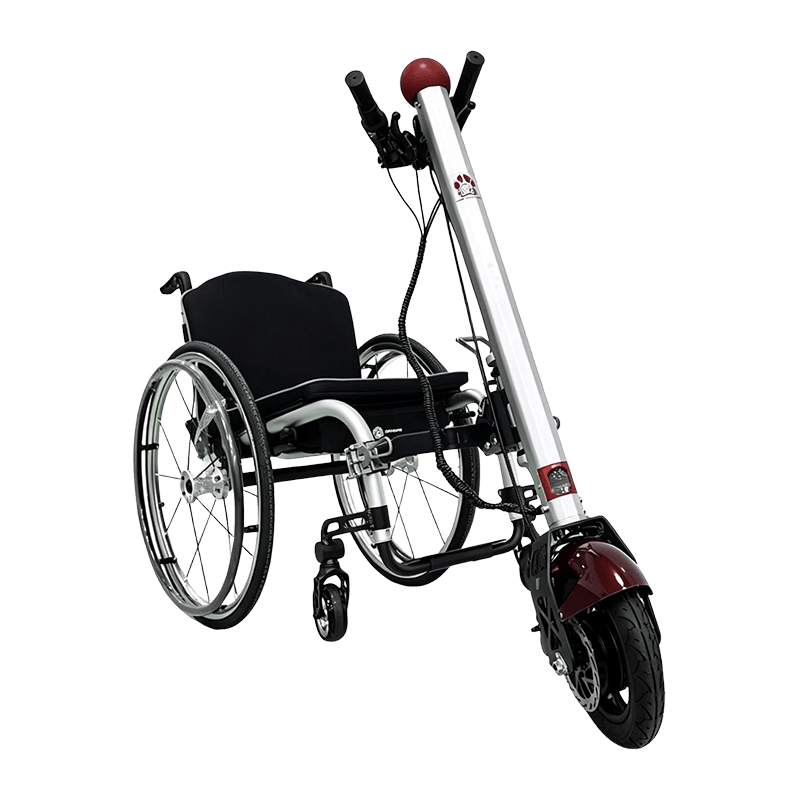
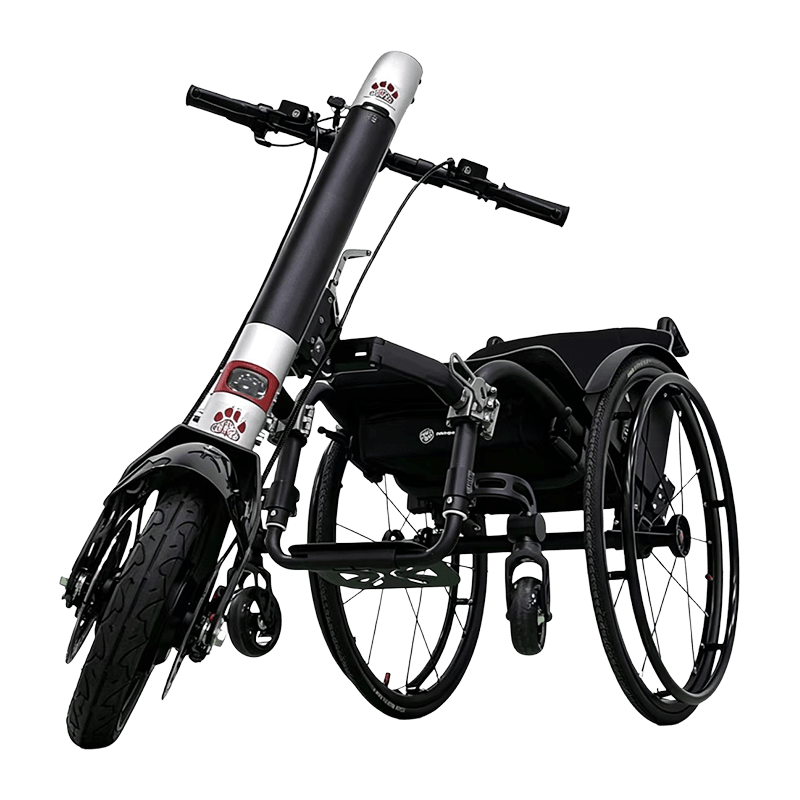
A front-mounted electric handcycle attachment converts a manual wheelchair into a powered front-wheel-drive vehicle. It clamps to the front frame, lifts the casters clear of the ground and drives from a single wheel under handlebar control. The rear wheels become trailing wheels, so braking, cornering and obstacle performance belong to the attachment rather than to the chair.
For OEM buyers, that geometry splits the work into two questions: which chairs a standard bracket covers, and which parts of the unit can change without invalidating the design evidence behind the declaration of conformity.
What a Front-Mounted Electric Handcycle Attachment Does
A front-mounted electric handcycle attachment is a detachable powered drive unit that mounts to the front frame of a manual wheelchair, raises the front casters off the floor and propels the chair through one driven front wheel.
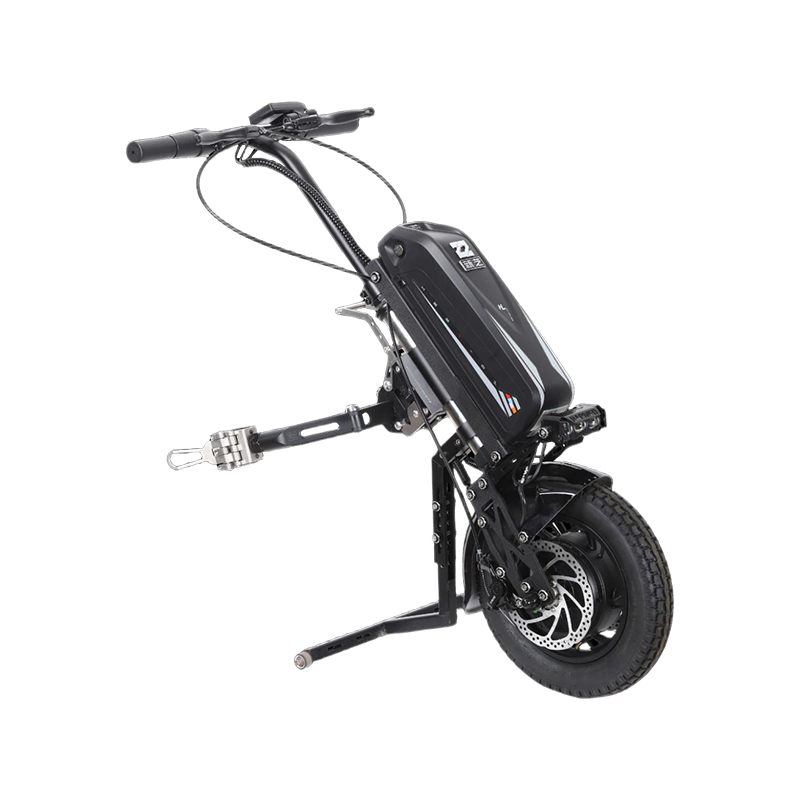
DefinitionFront-mounted electric handcycle attachment: a powered add-on containing a motor, controller, battery pack, handlebar assembly and a single front wheel, clamped to a manual wheelchair so that the chair is driven from the front instead of by the user's rear-wheel push.
Three mechanical facts follow from that design, and each one shapes a purchasing decision.
- The clamp carries the front end of the chair, so bracket geometry and frame tube condition matter as much as motor output.
- The chair keeps its rear wheels but stops using them for propulsion, which turns tyre pressure and camber into range variables rather than speed controls.
- The unit is normally removable, so lifting weight and storage space become daily-use issues rather than data sheet numbers.
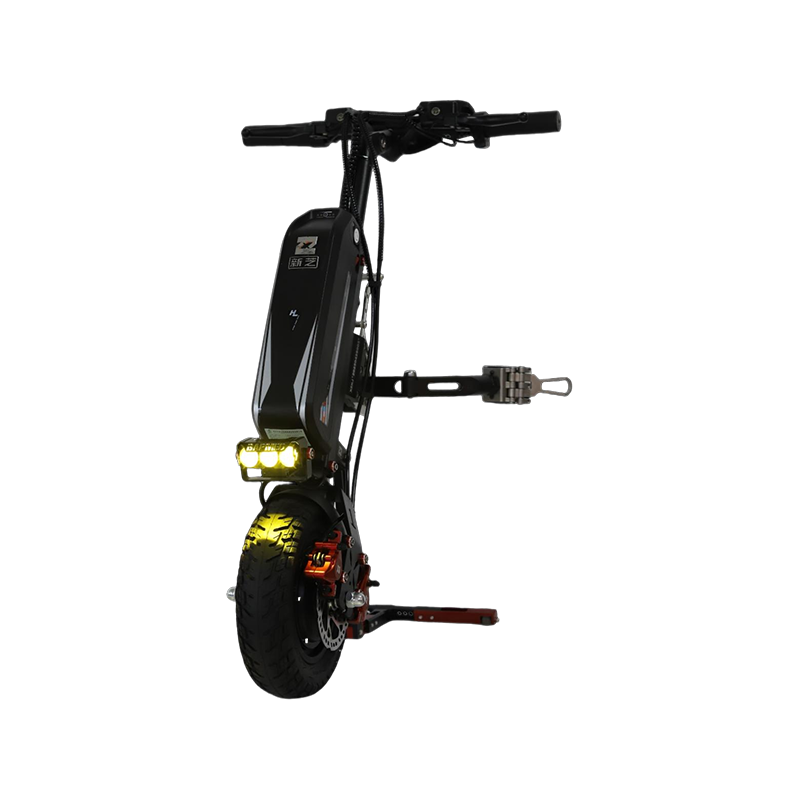
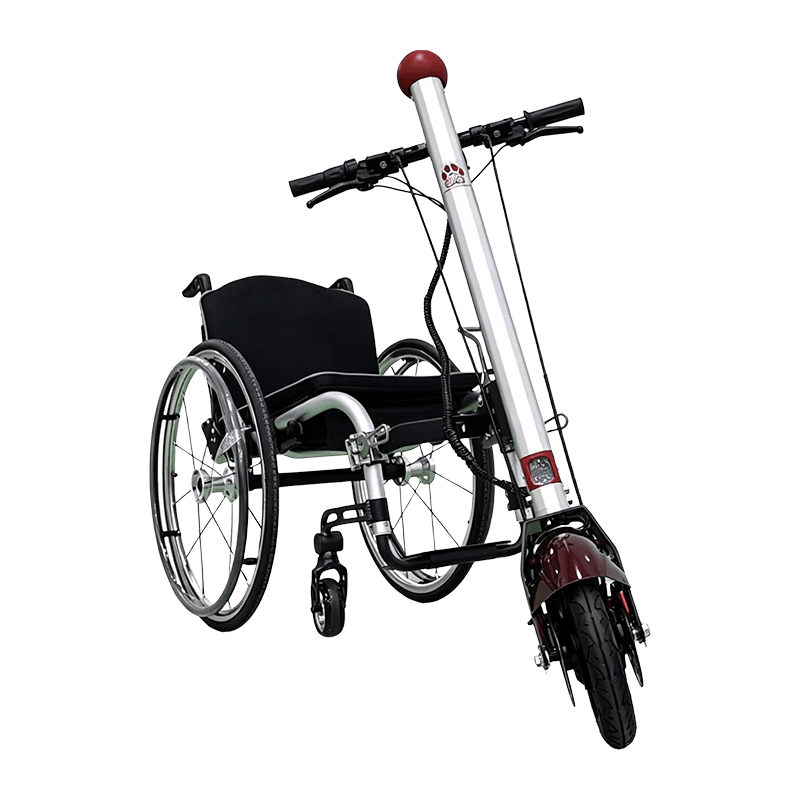 KBCT03 Electric Handcycle Wheelchair AttachmentFront-mounted powered assist for manual wheelchairs, with 350 W motor, 36 V battery, and configurable OEM/ODM options for mobility suppliers.View Product →
The attachment is part of a powered mobility system when mounted and an accessory when sold separately, so the intended purpose stated in the labelling decides the regulatory path.
Compatibility: Five Interfaces That Decide Whether It Fits
Five interfaces decide fit: front frame tube diameter and profile, frame type, caster and footrest clearance, seat-to-floor height measured under load, and the combined weight rating of chair and user.
| Interface | How to check it | Typical failure if it is wrong |
| Front frame tube diameter and profile | Measure with calipers at the exact clamp point, including paint or powder-coat thickness | Bracket cannot close squarely and shifts under load |
| Frame type: rigid or folding | Check whether the cross-brace passes through the clamp zone | Bracket sits at an angle, or the chair no longer folds with the unit mounted |
| Caster and footrest clearance | Check the gap with the casters lifted as they sit in use | Footrest contacts the attachment and ground clearance drops |
| Seat-to-floor height under load | Measure with the user seated and the cushion in place | Wrong mounting angle, reduced clearance and less predictable ramp behaviour |
| Weight rating of chair plus user | Add chair weight, user weight and battery weight | Frame fatigue around the clamp area and longer stopping distances |
Measure the frame tube with calipers at the point the clamp will actually sit. A bracket that cannot close squarely will move under load, and no torque specification compensates for that.
Seat-to-floor height is the measurement most often skipped. Taking it with the user seated and the cushion in place can shift the mounting angle enough to change front-wheel ground clearance and tipping behaviour on ramps.
For a catalogue, the realistic target is a bracket family with shim options covering the frame diameters and seat heights your market sells. Ask for the covered range in millimetres, not a list of wheelchair brands.
OEM Customization: Which Specifications You Can Change
A typical OEM programme allows customization of the mounting bracket, motor voltage and controller calibration, battery capacity, throttle and brake lever layout, colours, decals and packaging. The drive unit's structural design, wheel size and brake system stay as validated unless the buyer funds a full re-test.
- Fix the target wheelchair list and the clamp range in millimetres, including frames you expect to add within two years.
- Fix system voltage, 24 V or 36 V. It sets controller, charger, connectors and pack architecture, and it is costly to change after tooling.
- Fix battery capacity in watt-hours rather than amp-hours, so packs at different voltages compare on one scale.
- Fix the control layout: thumb throttle or twist grip, brake lever position, and grip requirements for users with limited hand strength.
- Fix cosmetics and documents: frame colour, decals, logo placement, retail packaging and manuals in the destination language.
- Freeze the bill of materials and record the revision number before releasing tooling.
Open to customization
- Bracket geometry within a validated range
- Battery capacity and cell format
- Throttle, control and grip layout
- Colours, decals, packaging and manual text
Requires full re-validation
- Motor and controller current limits
- Brake type and stopping performance
- Structural bracket design and load path
- Battery management settings and declared weight rating
Treat the brake system, the controller current limit, the battery management system and the structural bracket as one safety system. Changing any of them without re-testing breaks the evidence chain behind the declaration of conformity in your market.
Weight, Range and Terrain: The Numbers Worth Comparing
Compare attachment systems on three numbers: usable watt-hours, the weight of the heaviest single module the user must lift, and front wheel diameter.
Watt-hours are the only range figure that travels across suppliers and voltages.
Illustrative calculation: a 36 V pack rated at 10 Ah stores 36 x 10 = 360 Wh. A 24 V pack needs 15 Ah to store the same 360 Wh. At equal delivered power the 36 V system draws lower current, which reduces heating in cables and connectors.
Distance claims depend on rider weight, terrain, assist level and tyre pressure, so a watt-hour figure with a stated test condition is a more useful buying criterion than a range in kilometres.
Weight splits into two numbers: total system weight and the heaviest single module. For a unit that is lifted into a car, the second number decides daily usability.
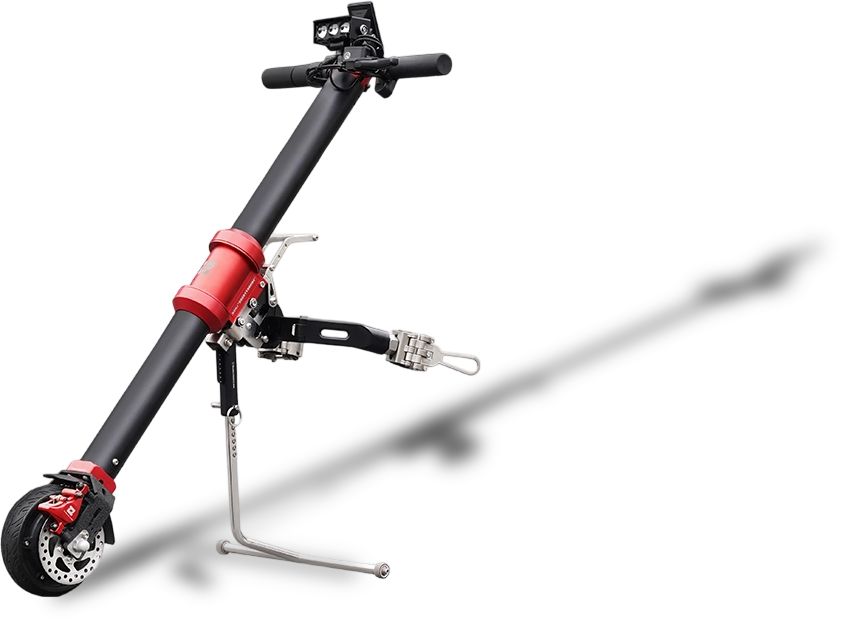
 SlimTough Portable Power Wheelchair AttachmentUltra-light quick-connect power head for flat paved routes, with 10 kg net weight, tool-free fitting, and a 6.5×2 solid tire.View Product →
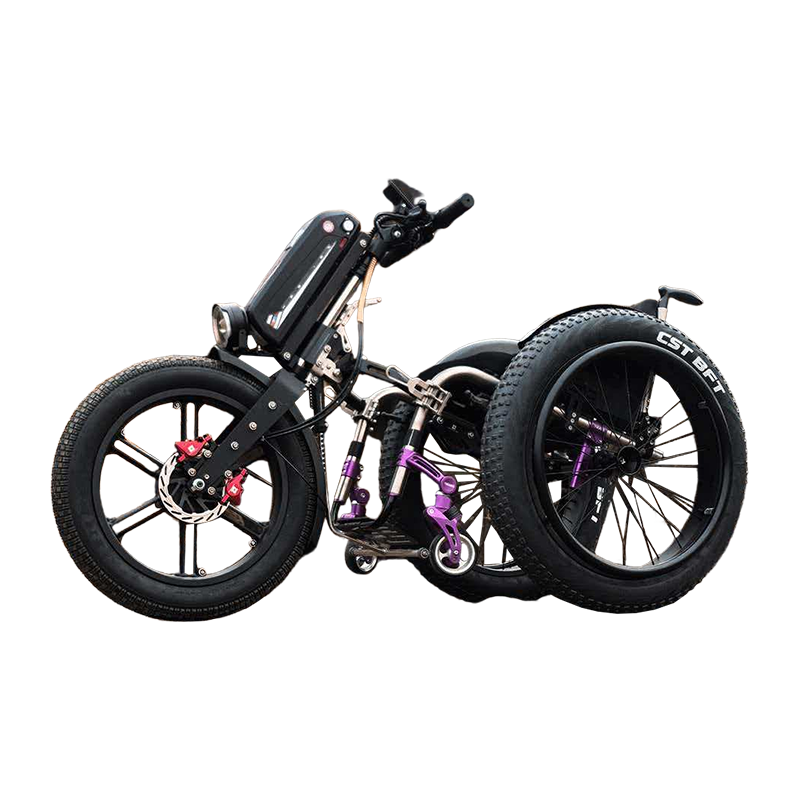
Front wheel diameter sets the terrain class. Small, light wheels suit indoor and urban surfaces and keep the lifted front end low; larger treaded wheels roll over gravel and kerbs more predictably, at the cost of weight and a wider turning circle.
Standards, Documentation and Import Risk
Ask for test evidence against the standards that apply to powered wheelchairs: ISO 7176-8 for static, impact and fatigue strength, ISO 7176-14 for power and control systems, and ISO 7176-15 for information disclosure, plus UN 38.3 and IEC 62133-2 for the lithium battery.
- ISO 7176-8: static, impact and fatigue strength, the evidence behind the frame and bracket load path.
- ISO 7176-14: power and control systems for electrically powered wheelchairs and scooters, including braking.
- ISO 7176-15: information disclosure, documentation and labelling.
- EN 12184: requirements and test methods for electrically powered wheelchairs, scooters and their chargers in Europe.
- UN 38.3: transport testing for lithium batteries, requested by carriers before a booking is confirmed.
- IEC 62133-2: safety requirements for lithium-ion cells and batteries used in portable applications.
These documents are deliverables, not marketing extras. A shipment without the UN 38.3 test summary can be refused at the freight booking stage, and a manual without destination-language warnings moves a liability question to the importer.
Medical device classification follows the intended purpose stated in the labelling and the target market: Regulation (EU) 2017/745 in the European Union, and a claims-based pathway in the United States. Confirm the class with the importer's regulatory contact rather than inferring it from the product category.
Qualifying an OEM Partner: Capability and Verification
Qualify an OEM partner on four points: documented manufacturing capability, a sample mounted on the exact wheelchair frames you sell, a controlled revision process, and export experience with the battery documentation your market requires.
Suzhou Compaw Intelligent Technology Co., Ltd., trading as COMPAW, is a Suzhou-based manufacturer combining research and development, production and global trade in intelligent rehabilitation aids and accessible mobility equipment. The company reports more than 25 years of manufacturing experience, a 50,000 square metre factory, more than 300 employees and an export share above 70 percent, with site content published in English, Russian, Spanish and German.
Buyers can review the factory overview and its certification section before requesting samples.
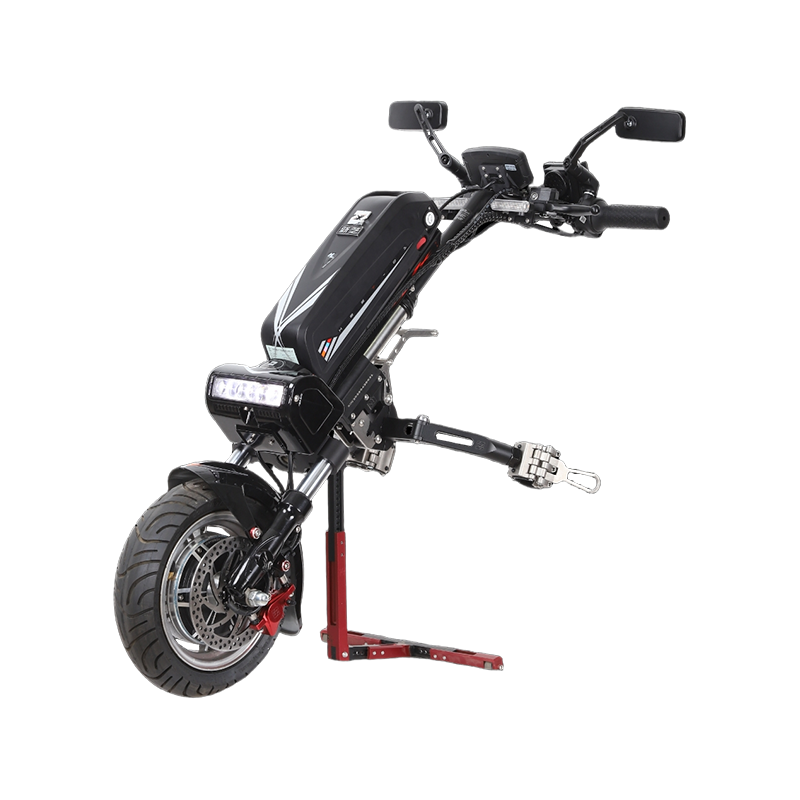
The electric handcycle attachment family runs from portable units such as SlimTough through all-terrain models such as OmniPath, which allows a distributor to serve several user profiles through one OEM relationship.
 OmniPath Off-Road Electric Wheelchair AttachmentAll-terrain front power attachment for manual wheelchairs, with 800 W motor, 20-inch tire, and sealed frame for beach, gravel, and coastal use.View Product →
- Clamp drawing with the covered frame tube range in millimetres.
- A sample mounted on the exact chair models you sell, with the user's cushion and footrests in place.
- The list of components shared across the model family and those that are model-specific, because that list sets your spare parts stock.
- Test reports with revision numbers and dates, plus manual, label and packaging files in the destination language.
Programme-specific requirements, including bracket drawings and sample arrangements, go through the contact page.
Practical Answers Before You Place an Order
Four questions come up in almost every front-mounted attachment programme, and each has a specification-level answer.
Can one attachment fit every manual wheelchair?
No. Frame tube diameter, frame type and seat-to-floor height vary enough between models that one bracket covers only a defined range. The commercial answer is a bracket family with shim options and a published millimetre range, so a dealer can confirm fit without measuring every chair.
Is 36 V better than 24 V?
Not inherently. A 36 V 10 Ah pack and a 24 V 15 Ah pack both store 360 Wh. The 36 V system draws lower current at the same power, which suits heavier users and hillier routes; the 24 V system matches the larger installed base of 24 V chargers and accessories.
What documentation should ship with an export order?
A declared specification sheet, a user manual in the destination language, warning labels, a UN 38.3 test summary for the battery, and ISO 7176-8 and ISO 7176-14 evidence when the attachment ships as part of a powered mobility system.
What is the critical path in a new OEM project?
The physical sample. No drawing review replaces mounting the unit on the exact wheelchair with the user's cushion and footrests in place, because seat-to-floor height under load and caster clearance cannot be confirmed from a frame drawing.