English
 русский
 Español
 Deutsch

Content
A resident weighing 92 kg, a straight staircase of 14 steps at a 33-degree pitch, a 920 mm clear width between handrails, and two carers who currently lift a wheelchair between floors by hand: that is where most stair-climbing decisions actually begin. The staircase is fixed. The person is fixed. Only the device can change.
The conclusion first: stair-climbing wheel chair technology succeeds or fails on three matches, not on a headline climbing angle. The device must be tested against a standard that genuinely covers stair use, the staircase must be measured with real numbers instead of estimated ones, and the person who operates the machine must be trained on that specific unit under load. When any one of those three is missing, the safest-looking product on the market turns into a daily risk.
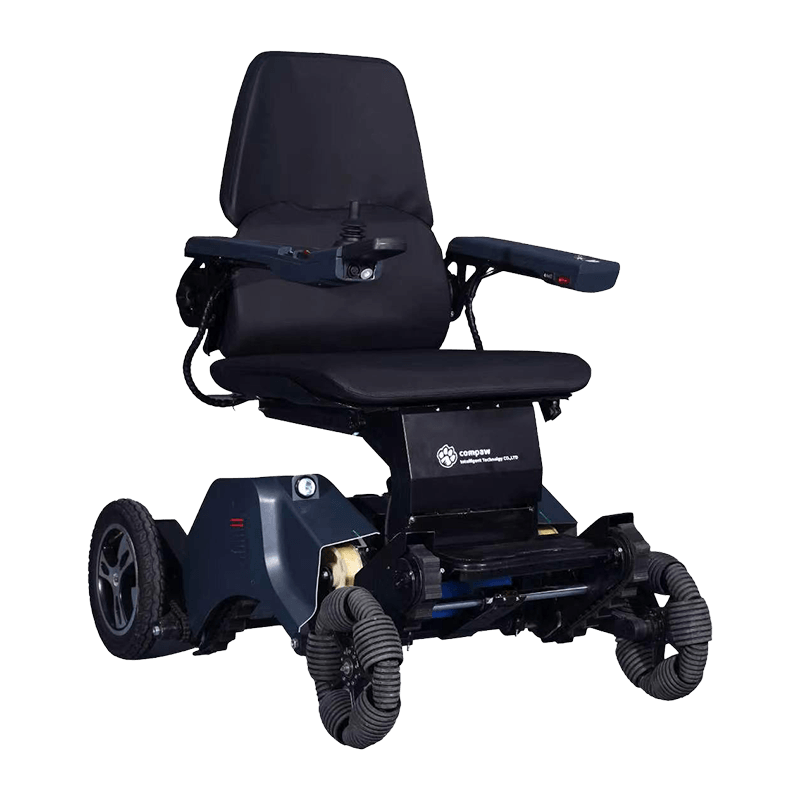
What follows separates the drive designs, the safety requirements that govern them, the measurements that decide fit, and the applications where these machines genuinely earn their cost. The current stair-climbing wheelchair configurations are a practical reference for the hardware differences described below.
Drive Designs and What Each One Tolerates
Four approaches cover almost every stair-climbing wheelchair and stair-climbing attachment in service today. The differences show up on the staircase, not in the brochure.
| Drive design | Stair tolerance | Handling and mass | Typical application |
|---|---|---|---|
| Tracked (crawler) | Straight flights around 30 to 40 degrees, including uneven outdoor steps | Heaviest units; very smooth motion; needs landing space to rotate | Home entrance steps, care facilities, outdoor approaches |
| Wheeled star cluster | Regular, well-built stairs at modest pitch; less forgiving of damaged treads | Lighter and more manoeuvrable indoors | Indoor staircases in houses and clinics |
| Hybrid wheel and track | Mixed conditions: indoor flights plus ramps and curbs | Complex mechanism; higher service demand | Buildings with varied level changes |
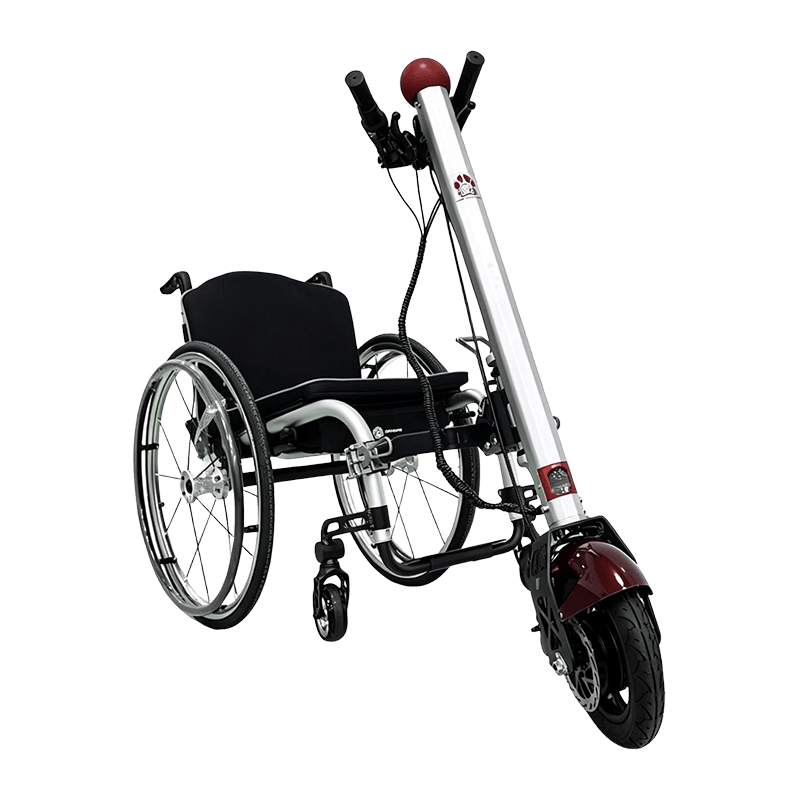
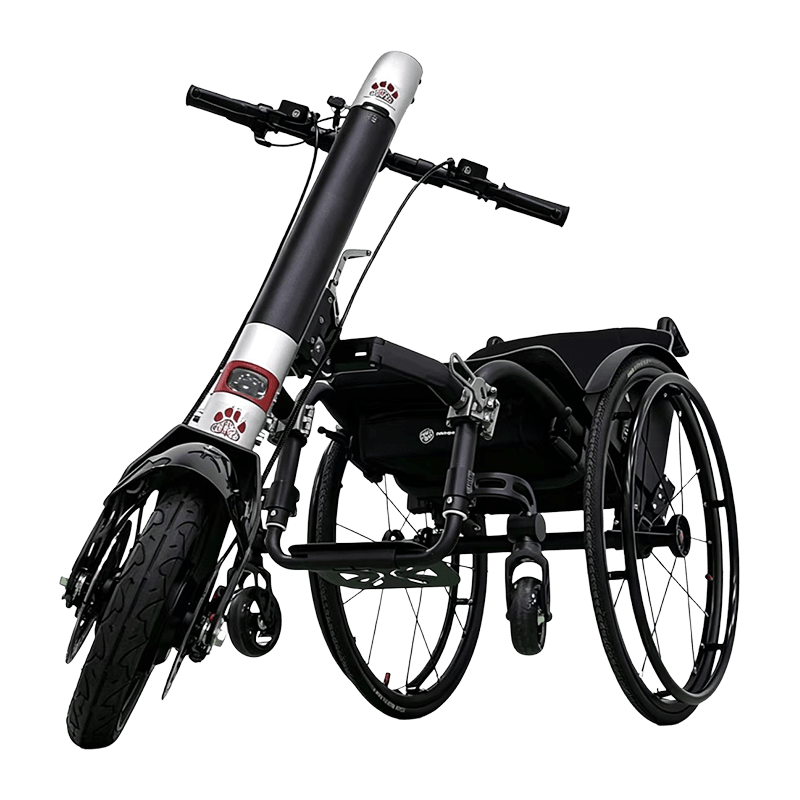
| Stair-climbing robot or attachment | Depends on the host wheelchair frame and its mounting points | Keeps the user in their own chair; adds a separate load | Users who already own a fitted wheelchair |
Tracked systems spread the load across a longer contact patch, which is why they cope with worn stone edges and outdoor grit better than wheel clusters. The trade-off is mass: many tracked units exceed 40 kg, so moving the device when unoccupied can require two people. Wheeled clusters are easier to handle on standard indoor flights but demand more precision from the operator at the top landing.
Winding or spiral staircases with narrow treads fall outside the validated range of most powered stair climbers. If your building has one, treat it as a custom engineering question rather than a catalogue question.
 Custom Tracked Stair-Climbing Wheelchair for Complex StaircasesA custom tracked stair-climbing wheelchair for projects where stair geometry or wheelchair-standards test reports require a tailored rather than catalogue approach.View Product →
Safety Requirements: What the Standards Actually Test
Stair-climbing wheelchairs sit in the wheelchair standards family, not the fixed-lift family. That distinction decides which test reports you should be asking for.
Stability, braking and anti-tip performance
- ISO 7176-1 covers static stability, including how the chair behaves when the occupant shifts weight.
- ISO 7176-2 covers dynamic stability of electrically powered wheelchairs, which matters during turning and slope transitions.
- ISO 7176-3 covers brake effectiveness, including the ability to hold position on an incline with the drive disengaged.
- ISO 7176-28 sets requirements and test methods specifically for stair-climbing devices: a defined test staircase, anti-tip behaviour, occupant restraint, and controlled descent if power is interrupted.
A fail-safe brake, one that engages when power is lost rather than when it is supplied, is the single most important mechanical detail on a stair climber. Ask directly whether the brake is spring-applied and how it has been verified on a slope.
Electrical, battery and thermal safety
If the manufacturer markets the product as medical electrical equipment, IEC 60601-1 applies to basic safety and essential performance. In practice this means battery management with over-charge and deep-discharge protection, an emergency stop within the operator's reach, tilt sensing that cuts drive before the frame over-rotates, and an ingress rating that matches outdoor use.
Structure, load and durability
ISO 7176-8 covers static, impact and fatigue strength. A useful test report names the exact model, the rated load, and the pitch of the test staircase. Summaries that list a certificate number without those three details tell you very little.
Fixed stairlifts and inclined platforms follow EN 81-40 instead. If a supplier presents EN 81-40 paperwork for a portable wheel chair, the framework does not match the product. In the United States, powered stair-climbing wheelchairs are typically regulated as Class II devices requiring 510(k) clearance; in the EU, classification depends on the intended-use claims made under MDR 2017/745.
Test reports only reflect the process behind them. Manufacturing scale and traceability belong in the same conversation as certification: our own production runs from a 50,000 m² facility with more than 25 years of manufacturing experience behind it, which is the level of capacity needed to keep test documentation aligned with what actually ships.
Matching the Device to a Real Staircase
Estimating staircase dimensions is the most common cause of an expensive return. Collect these figures before shortlisting anything:
- Pitch: rise and going per step, or the angle in degrees. A 28-degree flight and a 35-degree flight rarely share a shortlist.
- Flight length, step count, and both landings. Landings decide whether the device can rotate, park, and be loaded safely.
- Clear width between handrails and skirting. Domestic stairs commonly run 850 to 950 mm; below roughly 800 mm, several models drop out immediately.
- Door widths and turning space on each floor. A 760 mm door leaf is a frequent bottleneck.
- Surface and environment: carpet, stone nosing, outdoor rain and grit.
- Occupant data: weight with clothing and equipment, seated posture, transfer ability, and whether a harness can be worn comfortably.
- Operator: who runs the machine daily, and can that person manage the device mass alone?
Load margin deserves its own line. A unit rated to 120 kg carrying a 92 kg user plus 10 kg of equipment leaves less headroom than the headline number suggests, particularly on outdoor steps. Stability testing assumes a fixed load distribution; real passengers shift, lean and fidget.
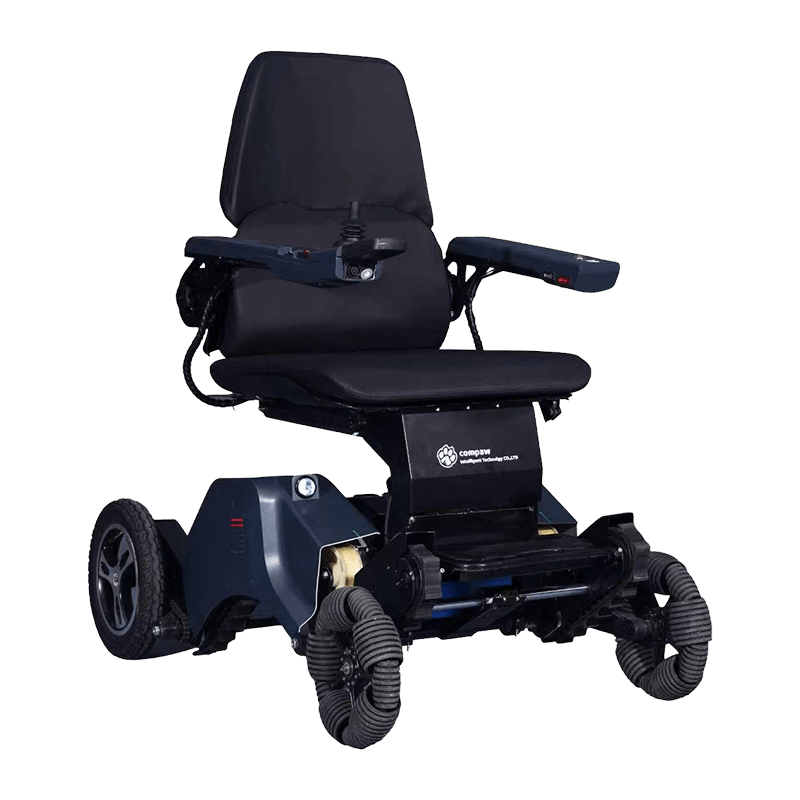
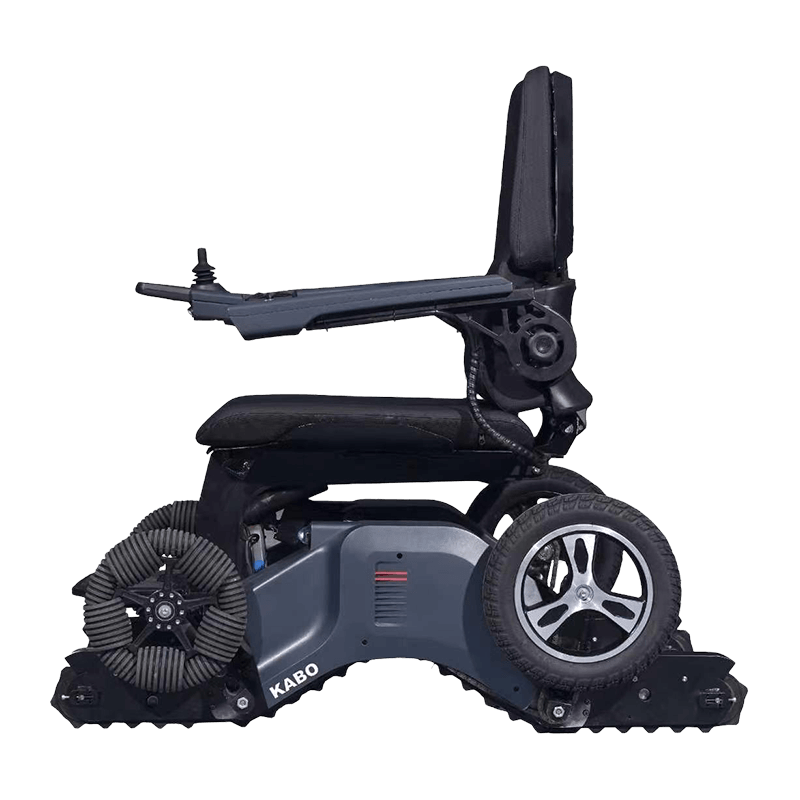 Electric Stair-Climbing Wheelchair with Tracked Drive SystemTracked electric wheelchair with 500W motors, 24V 30Ah battery, 80 kg rated load, and stair-climbing mode; suitable for stairway access assessments.View Product →
Practical Applications That Justify the Cost
Homes with entrance steps
Where a fixed stairlift cannot be installed, an outdoor stair climber keeps one entrance usable in all weather. Outdoor models need an ingress rating that reflects rain and grit, and a storage position near a power outlet.
Care and nursing settings
Manual lifting is the leading cause of staff back injury in residential care, and a two-person carry is also the least dignified option for the resident. A nursing stair climber built around assisted transfer keeps the routine consistent across shifts, which is where incident rates actually fall.
Custom Nursing Stair Climber for Assisted TransferCustom nursing stair climber for assisted-transfer routines in care settings; no specifications are listed, so confirm details with the manufacturer before use.View Product →
Public and commercial venues
Hotels, clinics, museums and transport hubs use powered stair climbing for guest access when lifts are unavailable, out of service, or simply not present in a heritage building. Note the limits honestly: a powered wheelchair is not a substitute for a building evacuation plan, since battery life, device mass and operator availability all constrain emergency use. It supplements a plan; it does not replace one.
Temporary and rental situations
Post-surgical recovery, short-term tenancies and seasonal properties are strong fits, because a portable stair climber can be delivered, used and collected without structural work.
Procurement Risks and the Questions Worth Asking
- Ask for the test report rather than a certificate summary: model, rated load and test staircase pitch must all appear.
- Calculate margin against occupant weight plus equipment, not occupant weight alone.
- Confirm flights per charge, replacement battery cost and lead time, and where the unit will be charged overnight.
- Check consumable supply: tracks, belts, batteries and controllers. A device that cannot be serviced within a reasonable radius is a liability, not an asset.
- Confirm training: how many sessions, who attends, and whether completion is documented.
- Plan floor and stair protection, and be honest about device mass during transport and storage.
- Assess the stairs themselves. Older timber treads and loose nosing may not accept repeated concentrated loads.
- Verify with your insurer whether the named operator is covered for passenger transport on stairs.
Two red flags are worth remembering. A climbing angle quoted without any standards reference is a marketing number, not a validated one. A supplier who claims one model fits every staircase has either not measured yours or is willing to skip that step.
Stair-climbing wheel chair technology performs best when it is boring: the same staircase, the same trained operator, the same procedure, repeated daily without incident. That kind of reliability is assembled from measured stairs, documented testing, and a device matched to one person's weight, posture and building. Buying on a climbing angle alone is where most of the trouble starts.