English
 русский
 Español
 Deutsch

Content
- 1 Survey the Staircase Before You Open a Catalogue
- 2 Match the Climbing Mechanism to Your Transfer Routine
- 3 Size Capacity and Battery for a Full Shift
- 4 Do Not Compromise on Restraints and Operator Workload
- 5 Cost of Ownership and the Risks Worth Paying to Avoid
- 6 Check the Manufacturer, Not Just the Model
- 7 A One-Week Decision Sequence
Twelve steps, a 170 mm riser, and a 1.0 m landing at the top: that is the flight between the day room and the therapy gym in a typical 200-bed care home, and it is where most stair-climbing wheelchair purchases are won or lost. Units are rarely rejected on price. They are rejected because the track could not grip a polished vinyl tread, because the landing was too shallow to rotate the chair, or because one caregiver could not manage a descent alone at the end of a shift.
The buying order that works in hospitals and elderly care facilities is short. Survey the stairs first, decide whether the resident stays seated through the whole transfer, then size capacity, battery and restraints against a full care shift rather than a single trip. The sections below follow that order, with the measurements, tolerances and procurement risks that come up in real tenders.
Survey the Staircase Before You Open a Catalogue
Two flights in the same building can behave completely differently. A straight flight with a wide landing may suit almost any device, while a winder three corridors away may rule out an entire category. Walk the route a resident actually takes, at the time of day staff actually move them, and write down the numbers rather than impressions.
- Riser height: 150-180 mm is common in institutional buildings. Steeper risers increase the climbing angle and the torque needed at start-up.
- Tread depth: 250-300 mm. A shallow or worn nosing changes how much contact a track or wheel keeps on each step.
- Clear flight width: 900-1,100 mm. This decides whether two staff members can walk beside the device or only one.
- Landings: around 1,200 mm of clear depth at the top and bottom is a practical minimum for aligning, rotating and dismounting.
- Stair configuration: straight flights and single quarter-turns are the easiest; winders, spiral flights and steps with inconsistent risers eliminate most wheeled climbers.
- Surface and obstructions: polished vinyl, tile, low-pile carpet or outdoor concrete, plus protruding handrails, fire doors and thresholds.
| What to measure | Typical care-setting value | Why it changes the purchase |
|---|---|---|
| Riser height | 150-180 mm | Sets the climbing angle, motor torque and how far the seat tips |
| Tread depth | 250-300 mm | Determines track or wheel contact on each step nose |
| Clear flight width | 900-1,100 mm | Decides whether two operators can assist side by side |
| Top and bottom landing | 1,200 mm clear or more | Space to align, rotate and dismount without lifting the chair |
| Stair configuration | Straight or single quarter-turn | Winders and spirals rule out most wheeled designs |
| Surface finish | Vinyl, tile, low-pile carpet | Affects traction, braking distance and cleaning routine |
Match the Climbing Mechanism to Your Transfer Routine
Three families cover most institutional needs, and the deciding question is not which one climbs best, but how the resident gets onto it and off it in a corridor at 6 a.m.
- Tracked stair-climbing wheelchairs place the load on a rubber track that grips the step edges. They are the steadiest option on steep, smooth or outdoor stairs, but they are heavier and need more landing space.
- Wheeled stair climbers use large wheels with a cluster or lever system. They are lighter and quicker on short flights, yet the operator carries part of the load, so they demand more physical strength.
- Nursing stair climbers and evacuation-style chairs keep the occupant seated in a belted chair moved by one or two trained staff. They are often chosen where the same chair must also handle bed-to-bed movement or emergency evacuation.
If a resident can transfer once and stay seated for several flights, a tracked or nursing design removes repeated lifting from the shift. If residents must be moved in their own wheelchair, the device has to fit that chair, and attachment points become part of the specification.
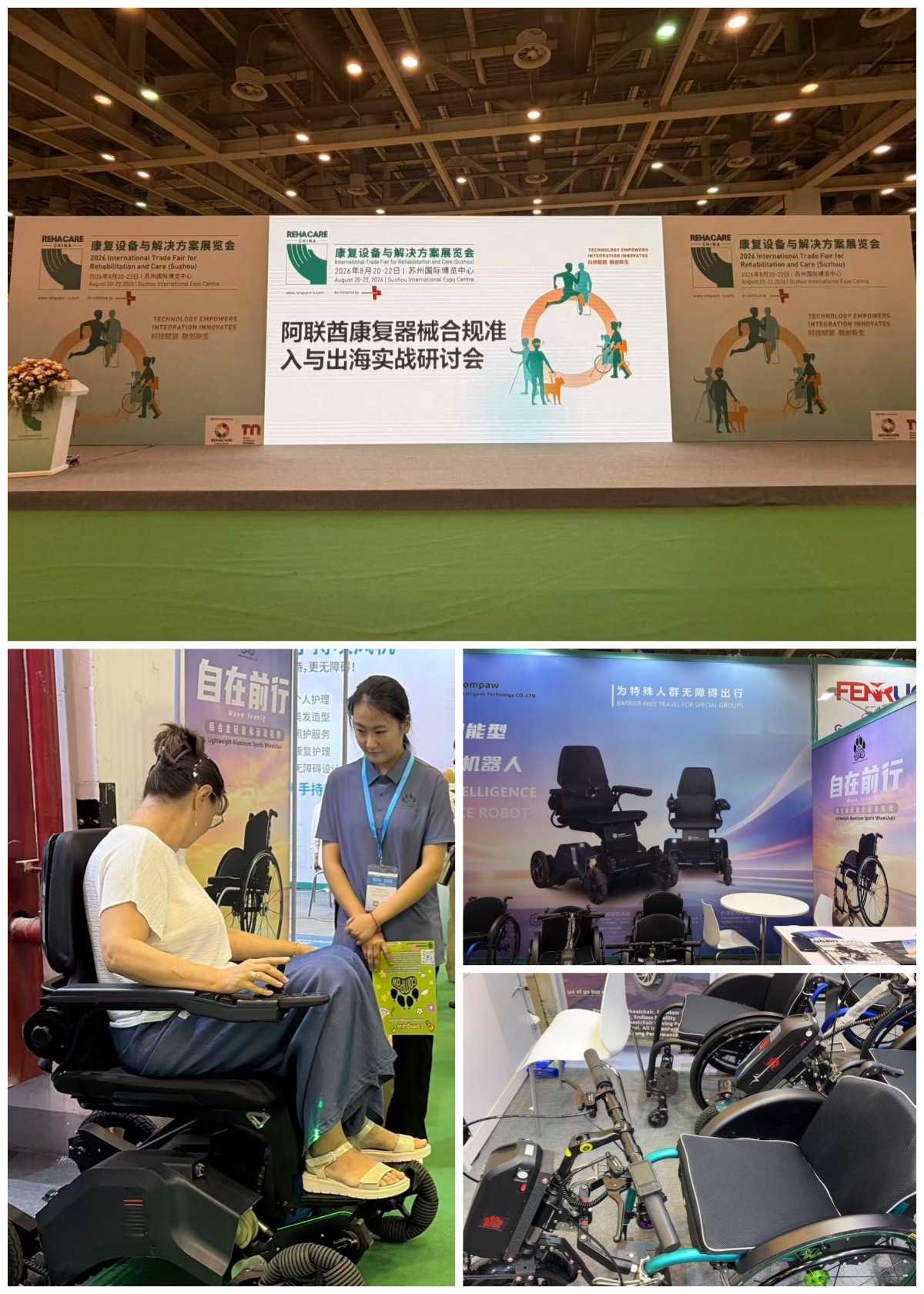 Tracked Stair-Climbing Wheelchair for Multi-Flight TransfersA tracked stair-climbing wheelchair from a custom manufacturer, suited for residents who transfer once and stay seated across flights, with storage and charging near stairs.View Product →
Whichever family you choose, confirm the device can be stored and charged close to the staircase. A climber parked two floors away is a climber that gets used once a week.
Size Capacity and Battery for a Full Shift
Datasheet capacity describes a device, not a resident. Add a 20-25% margin for clothing, a pressure-relief cushion, an oxygen cylinder, notes and a coat. A chair rated at 120 kg leaves very little room for a 95 kg resident plus equipment, and the safety factor is not the place to save money.
Battery claims deserve the same scepticism. "Thirty climbs per charge" is usually measured on a straight flight in mild conditions. In a care home, expect 30-40% fewer climbs when the route includes a slope, a stop on the landing or a cold corridor in winter. Ask the supplier:
- How many climbs per charge, at what load and what riser height?
- How long to reach 80% charge, and can the battery be swapped mid-shift?
- What is the battery life in cycles, and what does a replacement cost?
- How many transfers does a typical shift involve, and does one charged device cover it?
Do Not Compromise on Restraints and Operator Workload
Restraint and control details are what staff judge every day, long after the purchase order is signed.
- Lap belt plus chest or shoulder support, tested with the resident in their usual posture and clothing.
- Anti-tip geometry and a parking brake that holds on a landing, not only on flat ground.
- Controlled descent speed with a mechanical or hydraulic fallback if power drops mid-flight.
- Two defined operator grip points and an emergency stop within reach of the person behind the chair.
- Wipe-clean upholstery and a sealed control housing so the unit can be cleaned between residents without water reaching the electronics.
- Noise low enough that night use does not disturb a residential wing.
Most equipment-related incidents on stairs involve a single operator on a long flight. Write a two-operator rule into your manual handling policy, and budget training time for every new starter rather than once at installation.
Nursing Stair Climbers for Care FacilitiesCategory page for nursing stair climbers from a custom factory; highlights operator training and long-term costs like battery and track replacement.View Product →Cost of Ownership and the Risks Worth Paying to Avoid
Purchase price is usually the smallest number in a five-year calculation. Battery replacement, track and roller wear, belt sets, annual servicing, training refreshers and spare-part delivery all accumulate, and a cheaper unit with slow spares can cost more in lost staff time than the difference in price.
Six risks appear repeatedly in facility procurement:
- Buying from a photograph. Insist on a trial on your own staircase, with a staff member of representative weight.
- Capacity quoted for the device alone, with no margin for the occupant's equipment.
- No maintenance schedule and no spare parts list. Tracks, rollers, belts and batteries are consumables: ask for part numbers and lead times.
- Single-source spares with long delivery windows, which leave a chair idle for weeks.
- Documentation gaps: instructions for use, load testing records, warranty terms and a training checklist.
- No plan for storage and charging near the point of use.
Ask for a factory overview before you ask for a discount. Understanding how the hardware is produced, inspected and packed tells you more about spare-part availability than a specification sheet does, and the factory overview is a reasonable request to make of any serious supplier.
Check the Manufacturer, Not Just the Model
A stair-climbing wheelchair is a ten-year asset. The company behind it needs to still be making compatible parts when you order the second unit for a new wing.
Manufacturers who control their own production tend to solve three problems faster: matching capacity to an unusual staircase, supplying consumables such as tracks and batteries, and keeping a consistent design across repeat orders so the new chair behaves like the one staff already know. Experience measured in decades, a substantial production floor, a large technical team and support in several languages are not marketing details; they predict whether a part arrives in two weeks or two months. Compaw, for example, builds assistive mobility hardware on more than 25 years of manufacturing experience, which is the kind of background to verify through the service and support model offered to institutional buyers.
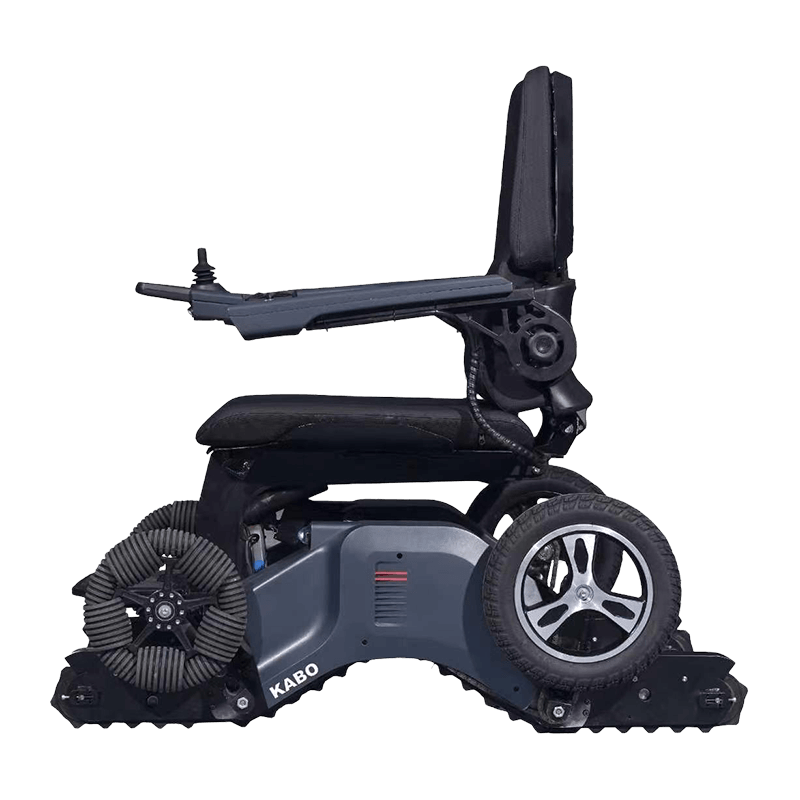 Electric Stair Climbing Wheelchair with Tracked Drive SystemTracked-drive electric stair-climbing wheelchair with 24V 30Ah battery, 250W motors, 80 kg load; verify manufacturer service and reference sites.View Product →
Ask any shortlisted supplier for a reference site with a similar staircase, and call it. A five-minute conversation with a care home that has run the same unit for two years answers more questions than a brochure.
A One-Week Decision Sequence
- Day 1: Measure every flight the device will use and record riser, tread, width, landings, surface and obstructions.
- Day 2: Confirm the transfer routine with nursing staff, and decide whether residents stay seated or move in their own chair.
- Day 3: Set the capacity floor (resident weight plus 20-25%) and the battery requirement for one full shift.
- Day 4: Shortlist two mechanisms and request on-site trials, spare parts lists and warranty terms.
- Day 5: Trial with staff, score the results, and compare five-year total cost rather than purchase price.
A stair-climbing wheelchair earns its place in a hospital or care home when three things line up: it fits the staircase, it matches how residents are actually transferred, and one or two trained operators can run it safely on a night shift. If any of those three is uncertain, no specification sheet will fix it later.