English
 русский
 Español
 Deutsch

Content
- 1 What a Power Attachment Adds, and What It Does Not
- 2 Four Formats, Four Different Problems
- 3 Terrain and Range: Where the Gains Are Largest
- 4 Transport and Storage Decide Whether the Attachment Gets Used
- 5 Comfort, Control and the Daily Commute
- 6 Fit Checks Before You Order
- 7 When the Barrier Is a Staircase, Not a Hill
- 8 What to Ask a Manufacturer Before Committing
Four blocks to the pharmacy is fine. Eight blocks to the grocery store means arranging a lift. A waterfront path with a six percent grade means stopping at the gate. Most long-term manual wheelchair users know their limit to the metre, and it is rarely about strength alone. It is the cumulative load that thousands of pushes put on shoulders, elbows and wrists over a decade.
An electric bike attachment moves that limit without replacing the wheelchair. The chair stays manual, stays light, stays foldable, and stays familiar to transfer into. A powered front unit or a rear drive is added for the trips that need help and removed for the trips that do not. One chair then covers two very different mobility profiles, usually for less than the price of a second powered chair, and the user stops planning every errand around a vehicle.
What a Power Attachment Adds, and What It Does Not
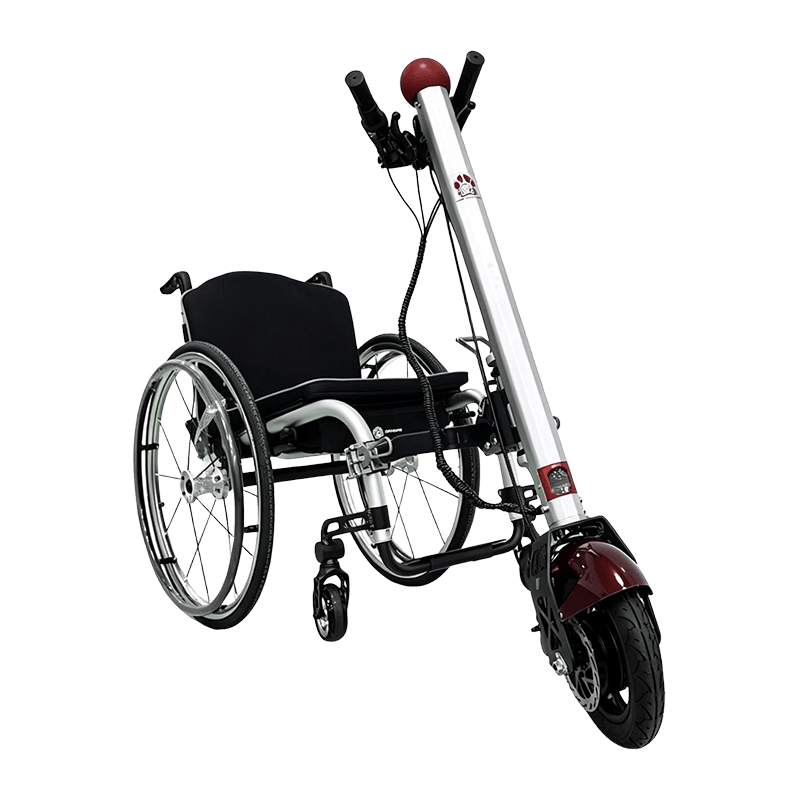
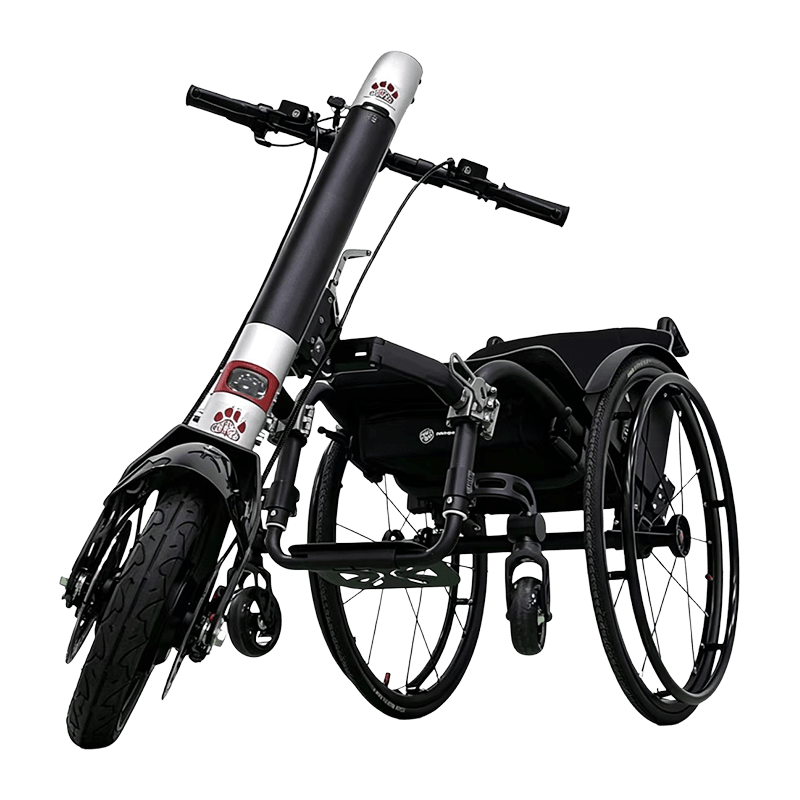
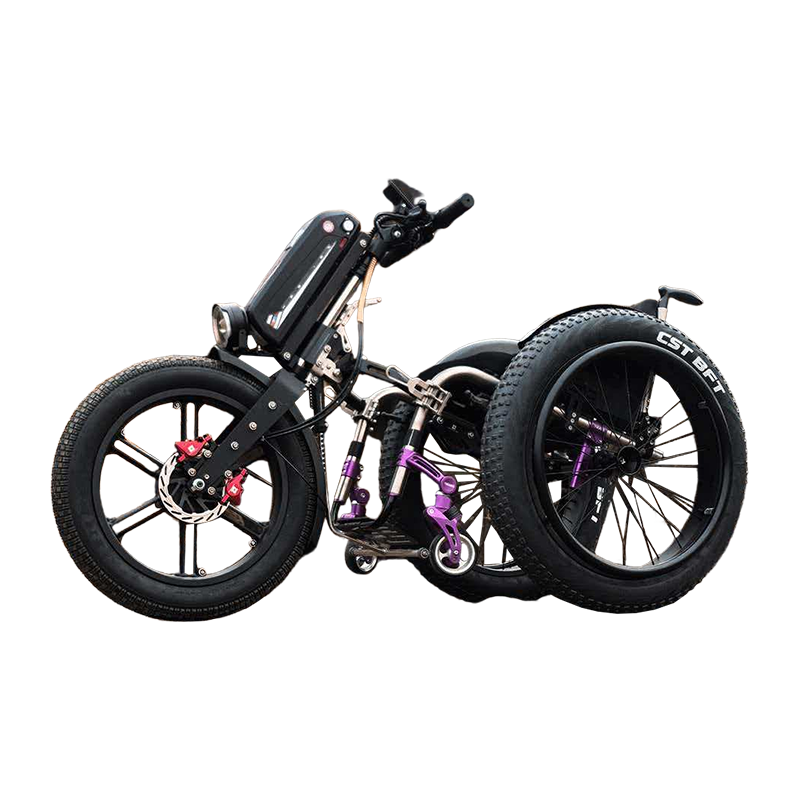
Start with the distinction that matters for expectations and for funding paperwork. A removable power add-on does not turn a manual chair into a power wheelchair in the clinical sense. It is assist equipment that mounts and unmounts in seconds. While it is mounted, the behaviour of the chair genuinely changes. A front-mounted handcycle unit lifts the casters off the ground, so the chair becomes a three-wheeled vehicle steered by handlebars rather than by the rims.
Specifications sit in bands rather than at fixed numbers. Motors commonly run between 250 W and 750 W, batteries are typically 36 V packs in the 10 Ah to 15 Ah range, unit weights land between roughly 8 kg and 20 kg, and assisted range works out at about 20 km to 45 km depending on rider weight, hills and how much of the trip is spent under power. Pavement modes are usually limited to walking pace, while street and off-road modes run considerably faster.
Four Formats, Four Different Problems
The first decision is not which brand to buy, it is which barrier is actually limiting the user. Someone who needs twelve assisted kilometres a day is choosing a different device from someone who needs help on a gravel trail twice a month. The main families of electric handcycle attachments and power-assist add-ons differ in where they mount, what they weigh, and what they give up in return.
| Format | Mounting point | Solves best | Main trade-off |
|---|---|---|---|
| Front-mounted handcycle attachment | Steering tube at the front of the frame; casters lift clear | Long commutes, mixed surfaces, sustained grades | Adds length to the chair; heavier to lift into a car |
| Rear power-assist unit | Behind the rear axle, usually a friction roller | Everyday pushing on smooth ground; fast to fit and remove | Traction drops on gravel, sand and wet grass |
| Power-assist wheels | Replace the rear wheels | Balanced assist while both hands stay on the rims | Extra weight in every transfer and every car load |
| Conversion drive kit | Frames and drives the existing chair | Users who cannot push the rims at all, even briefly | Heaviest option; least portable between chairs |
Terrain and Range: Where the Gains Are Largest
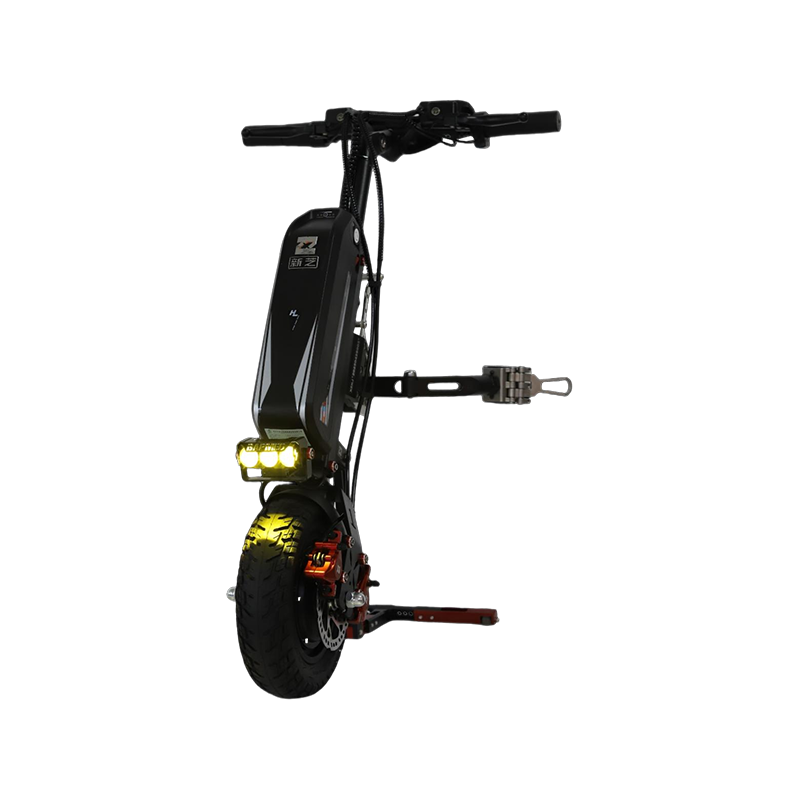
Assist pays off fastest on grades and loose surfaces, which are precisely the conditions that quietly delete routes from a manual chair user's mental map. A five percent slope that takes everything a rider has becomes a sustained, comfortable climb. Gravel, packed dirt, wet grass, cobbles and boardwalk planks all fall into the same category: passable with a motor, punishing without one. All-terrain units answer this with wider tyres, higher ground clearance and more torque, at the cost of weight and bulk.
The second gain is time. A trip that took thirty minutes of pushing can be done in ten to fifteen, and that changes how far a clinic, a workplace or a social visit feels.
 NeoPath All-Terrain Electric Wheelchair Power AttachmentPortable, all-around handcycle attachment with 48V battery and 45 km range, suited to faster daily trips and varied outdoor use.View Product →
Transport and Storage Decide Whether the Attachment Gets Used
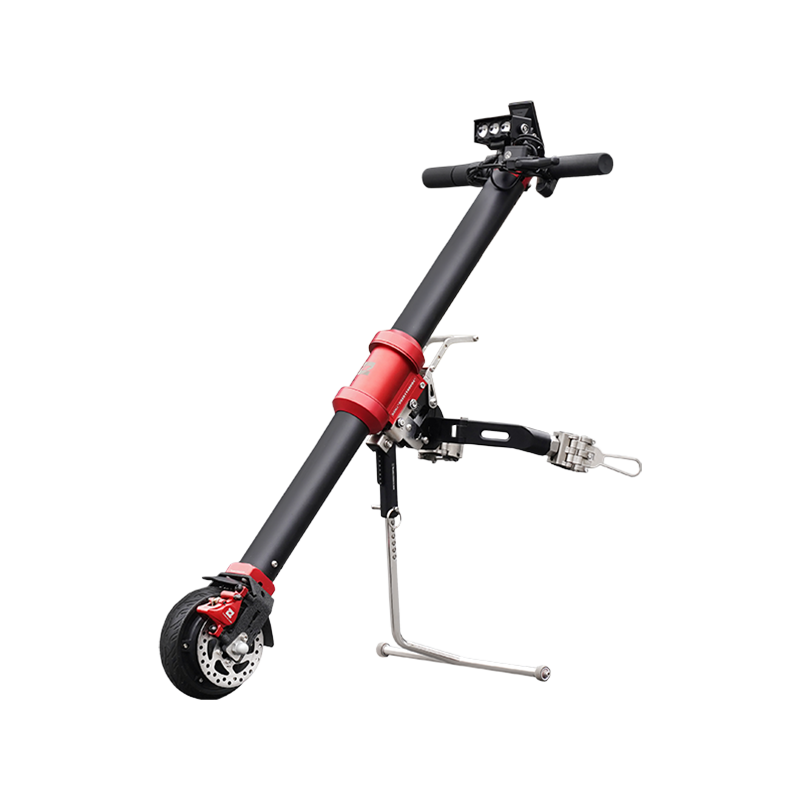
The best attachment is the one that travels in the same car as the chair. A unit that needs two people to lift, or that will not fit in the boot, ends up staying in the garage, and the purchase is wasted. Portable front units are designed around that constraint: quick-release mounting, folding handlebars, and a weight one person can manage with the same technique they already use for the chair.
Storage follows the same logic. A front unit occupies floor space roughly the size of a large suitcase. Lithium packs should live indoors, ideally between 15 and 25 degrees Celsius, and should be left at roughly half charge if they will sit unused for a season.
 SlimTough Ultra-Light Quick-Connect Electric Handcycle AttachmentUltra-light quick-connect handcycle attachment with up to 60 km range, made for short daily trips and easier one-hand carrying.View Product →
Comfort, Control and the Daily Commute
Assist changes the physical demands of a commute more than most people expect. Instead of the whole upper body working continuously, the hands rest on grips, the shoulders stay down, and the ride sits closer to cycling than to pushing. That reduction in repetitive loading is a large part of the appeal for users managing shoulder pain or a rotator cuff history.
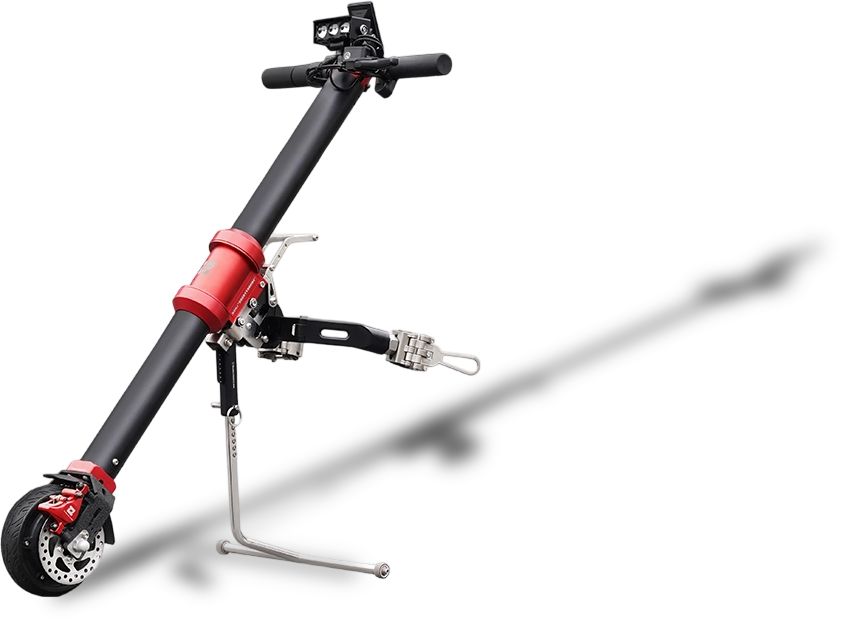
Control features matter more than raw speed for daily use: progressive braking that stays predictable with a loaded chair, a reverse mode for tight doorways, cruise control for long straight paths, and suspension that keeps the front wheel planted over expansion joints. Comfort-oriented models are tuned for exactly these conditions rather than for maximum top speed.
 Zepath Comfort-Series Electric Wheelchair Power AttachmentComfort-focused handcycle attachment with hydraulic brakes and long range, suited to smooth, stable daily travel and gentle control.View Product →
Fit Checks Before You Order
Compatibility is mechanical, and it is best confirmed standing next to the chair rather than reading a specification page.
- Seat width and frame type, because folding and rigid frames accept different mounting hardware.
- Caster size and fork geometry, which determine ground clearance once the front unit lifts the casters.
- Rear axle type, especially quick-release axles and camber tubes that interfere with bracketry.
- Total payload, calculated as user weight plus chair weight plus anything carried.
- Transport weight of the attachment itself, measured as the heaviest single piece rather than the total.
- Battery documentation, including a UN 38.3 test summary and a charger that matches local mains voltage.
- Spare parts: tyres, brake pads, controllers and battery availability over at least five years.
When the Barrier Is a Staircase, Not a Hill
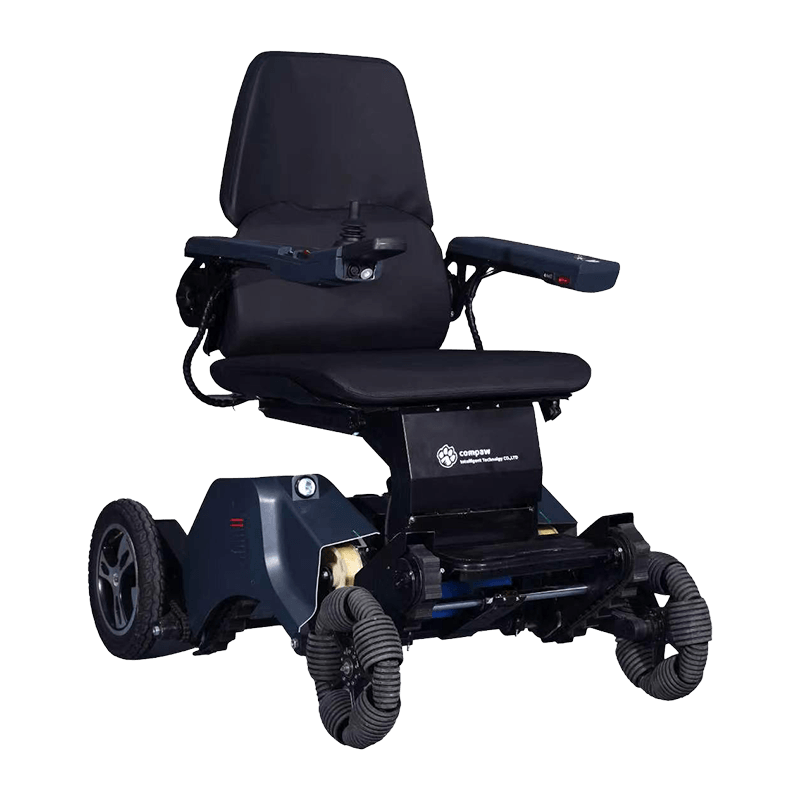
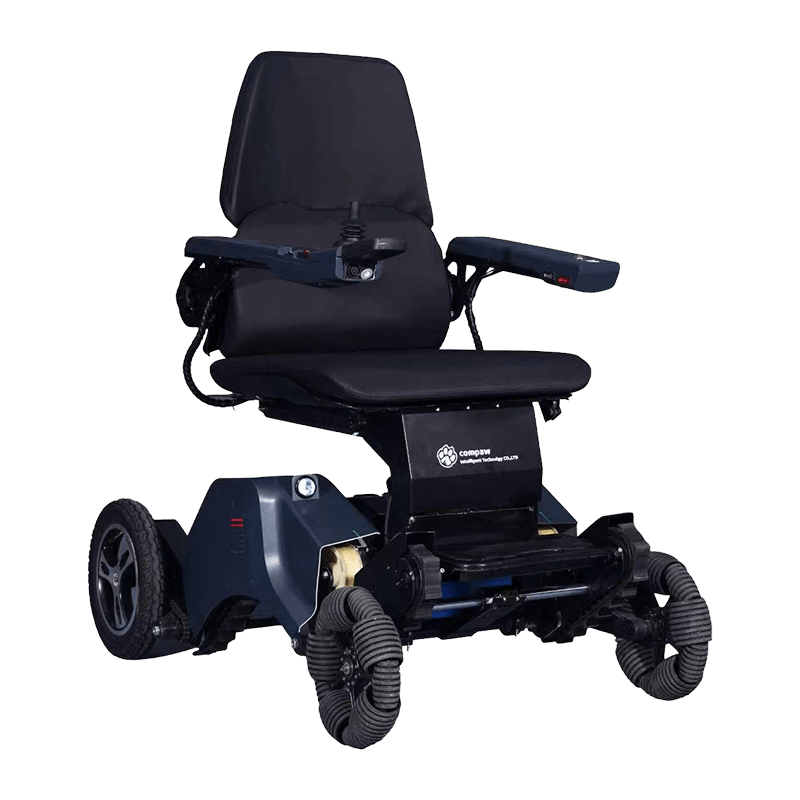
Some users face a different constraint: a flight of steps at the entrance, a raised platform at a train station, or no lift in an older building. This is a separate product category rather than a variant of a bike attachment. Stair-climbing wheelchairs and tracked stair climbers use a different drive principle, and they are usually specified with an attendant or a trained operator in mind.
It is worth clarifying which barrier dominates a user's week before spending anything. If it is distance and terrain, an attachment solves more of the problem. If it is vertical access, the attachment will not help, and the budget belongs elsewhere.
What to Ask a Manufacturer Before Committing
For a single user, the risk is a unit that fits badly or loses support after two years. For a dealer, clinic or distributor specifying a fleet, the risk is a product line that quietly disappears.
Ask how long the mounting interface has been in production, whether brackets can be adapted for unusual frame geometry, whether batteries and controllers are shared across models, and whether documentation and support exist in the languages the end users actually read. A supplier that builds power assist heads, stair-climbing equipment and daily living aids on one production base is easier to deal with over a five-year horizon than one selling a single imported model.
Compaw, for instance, works from more than 25 years of manufacturing experience, a 50,000 square metre factory and a team of over 300 people, with a power assist range that runs from lightweight portable units through all-terrain and comfort models. That breadth matters when a dealer needs several configurations from one source rather than one configuration from three.
The practical answer is simple. A manual wheelchair plus a removable power attachment is a different product category from a power wheelchair, and it suits a specific set of users well: those who can still push, who want to remain in a familiar chair, and whose daily barriers are distance, grade and surface rather than stairs. Checking frame compatibility, transport weight and battery documentation before ordering covers most of the risk. After that, the value shows up as routes that come back onto the map.