English
 русский
 Español
 Deutsch

Content
- 1 Tube Specification and Joint Design Come First
- 2 Rear Axle Position and Frame Geometry
- 3 Weight Distribution: Totals Hide the Useful Number
- 4 Wheels, Casters, and Rolling Resistance
- 5 Fasteners, Wear Parts, and the Failures That Actually Happen
- 6 Finish, Corrosion, and the Working Environment
- 7 Serviceability Decides the Real Cost of Ownership
- 8 A Specification Checklist for Buyers and Distributors
A 12 kg aluminum wheelchair can feel crisp on day one and vague by year two, and the alloy is rarely the reason. In frames returned for weld cracks, caster flutter, or a rear wheel that no longer runs true, the parent metal has usually done its job. What changed the outcome was a tube wall of 1.6 mm instead of 2.0 mm, a rear axle set too far rearward, or a caster fork with the wrong trail.
The short answer first. Five design factors decide how an aluminum manual wheelchair performs and how long it lasts: tube specification and joint design, rear axle position and frame geometry, wheel and caster selection, fastener and wear-part engineering, and serviceability. Alloy grade, paint colour, and upholstery sit well below those five, which is why two chairs carrying identical material certificates can behave like different products.
Tube Specification and Joint Design Come First
6061-T6 is the default frame alloy, with roughly 276 MPa yield strength in the parent metal, while 7005-T6 reaches about 350 MPa. Neither figure survives welding intact. Around a 6061 weld, the heat-affected zone can lose 40 to 50 percent of parent-metal strength unless the frame is post-weld heat treated. 7005 is often specified because it age-hardens at room temperature after welding and keeps more strength at the joint, at a higher tube cost.
Wall thickness and profile decide more than the alloy name. Butted tubing typically runs 1.6 to 2.0 mm at the butt ends and 1.2 to 1.5 mm in the middle, placing material where bending moments peak. An oval or hydroformed main tube adds torsional stiffness without mass, which the user feels as less flex when pushing hard or when one wheel drops off a kerb.
Ask three questions of any supplier: the wall thickness at the weld, the post-weld treatment, and whether the cross-brace and seat rails are reinforced. A supplier who answers all three usually controls the process that keeps a frame straight after five years of use.
| Design choice | What it improves | What it costs over time |
|---|---|---|
| Thicker tube wall at butt ends (1.8 to 2.0 mm) | Stronger joints, less flex under push load | Adds 0.6 to 1.0 kg, harder to lift into a car |
| Rear axle moved 2 to 3 cm forward | Shorter push arc, easier reach | Less rearward stability, higher tip risk |
| Camber of 2 to 3 degrees | Better lateral stability, hand protection | Wider chair, more drag on hard floors |
| 6-inch casters instead of 4-inch | Easier rolling over cracks and gravel | More weight, wider turning circle |
Rear Axle Position and Frame Geometry
Axle position is the most adjustable performance variable on a manual chair and the easiest to get wrong at the specification stage. Moving the rear axle 2 to 3 cm forward shortens the push arc and reduces effort per stroke, but it also shifts the centre of gravity toward the front casters and raises the risk of a forward tip on a slope.
Geometry sets the adjustment range. Seat depth, seat-to-floor height, the front-to-rear seat height difference (commonly 2 to 5 cm), and backrest angle determine posture, and posture determines how much force a user can apply through the pushrim before the shoulder starts to complain.
For durability, geometry decides where the load goes. A chair set up with the axle too far rearward forces the user to lean forward and push harder, concentrating stress at the seat rail and cross-brace, the two places aluminum frames most often crack.
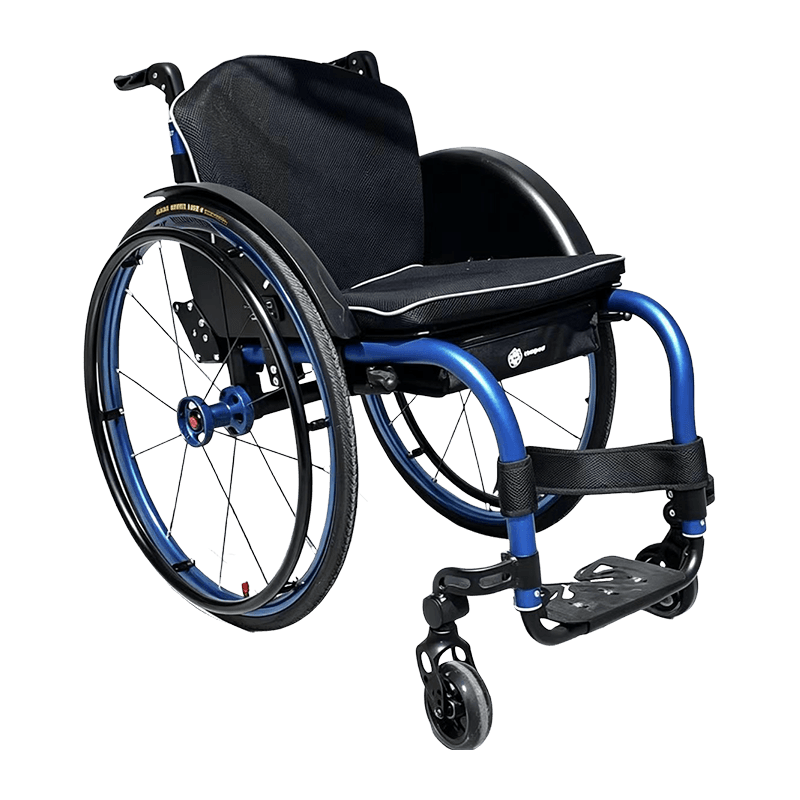
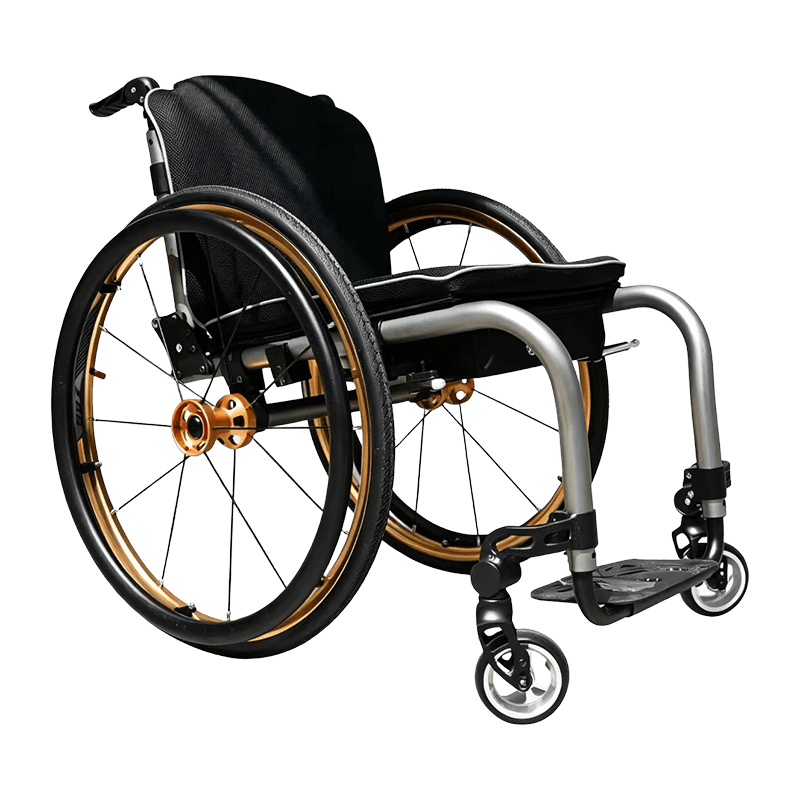
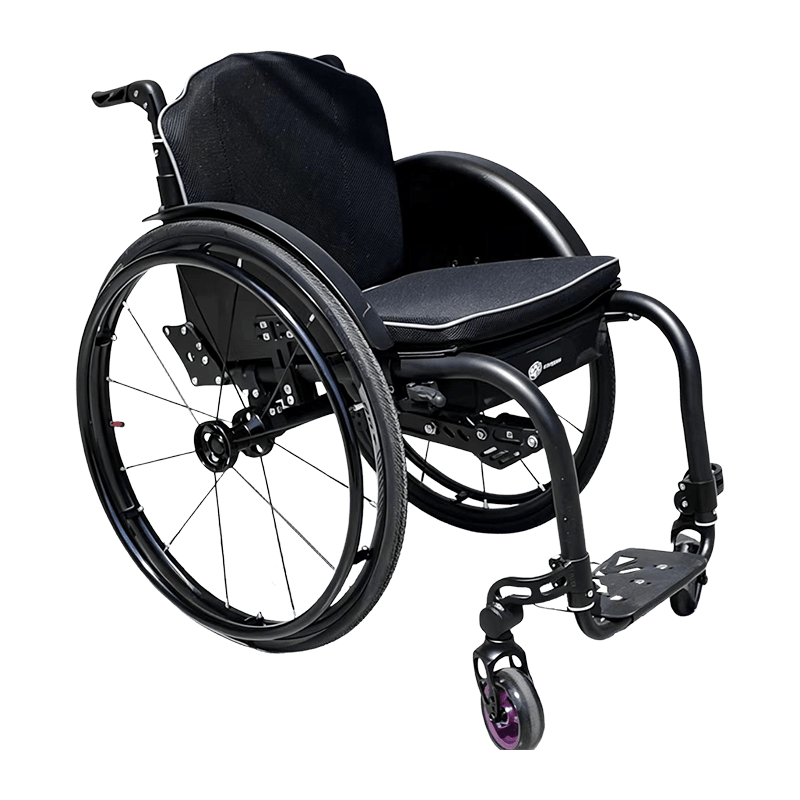 Lightweight Aluminum Self-Propelled Manual Wheelchair with Adjustable FootrestsReview this aluminum self-propelled wheelchair with adjustable footrests, 7 kg curb weight, and configurable seat dimensions for frame durability and rear-wheel weight considerations.View Product →
Weight Distribution: Totals Hide the Useful Number
Published chair weight is a total, and totals hide what matters. Cutting 500 g from the frame is a smaller gain than cutting 500 g from the rear wheels, because wheel mass sits at the end of the arm and is accelerated with every stroke. Chairs in the 10 to 13 kg range usually carry 2 to 3 kg in the rear wheels and 0.8 to 1.2 kg in the casters, so that is where weight reduction is felt first and where a specification deserves the closest reading.
Two numbers belong next to the weight figure: maximum user weight and the design safety factor behind it. A 120 kg rating on a frame designed with a 2 to 1 static factor is a different product from the same rating obtained with thinner tubing and a 1.5 to 1 factor, even when the catalogue pages look identical.
Wheels, Casters, and Rolling Resistance
Rolling resistance is dominated by tires and casters, not by the frame. Pneumatic rear tires run at 6 to 8 bar, and dropping to 4 bar raises rolling resistance noticeably on smooth indoor floors. Solid tires trade puncture-proof convenience for a firmer, harsher ride. Caster size should follow usage: 4-inch casters turn tightly in small bathrooms, while 6-inch casters cross thresholds, brick, and gravel with less effort and less flutter.
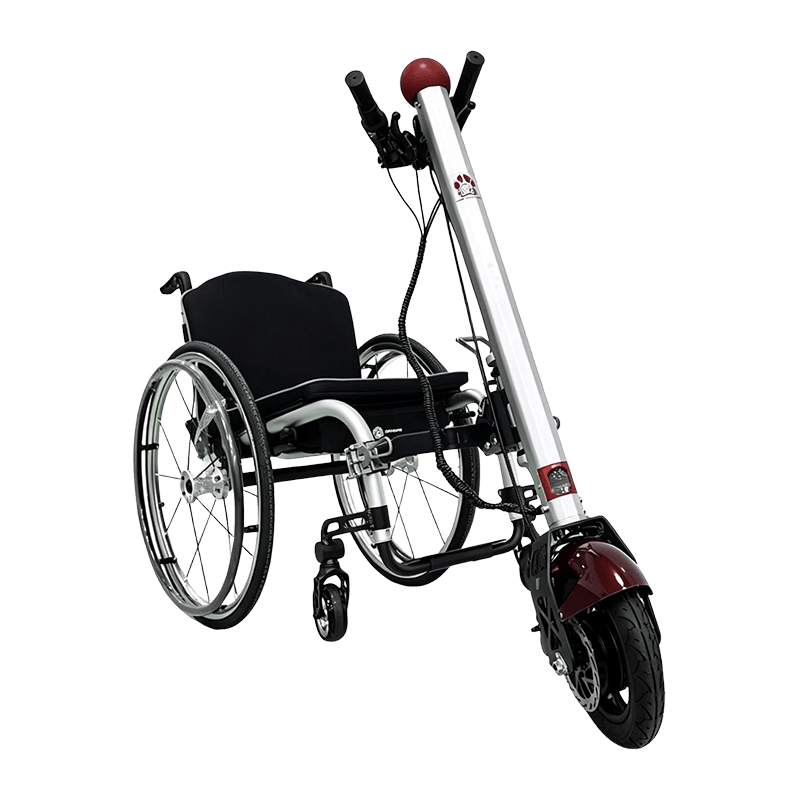
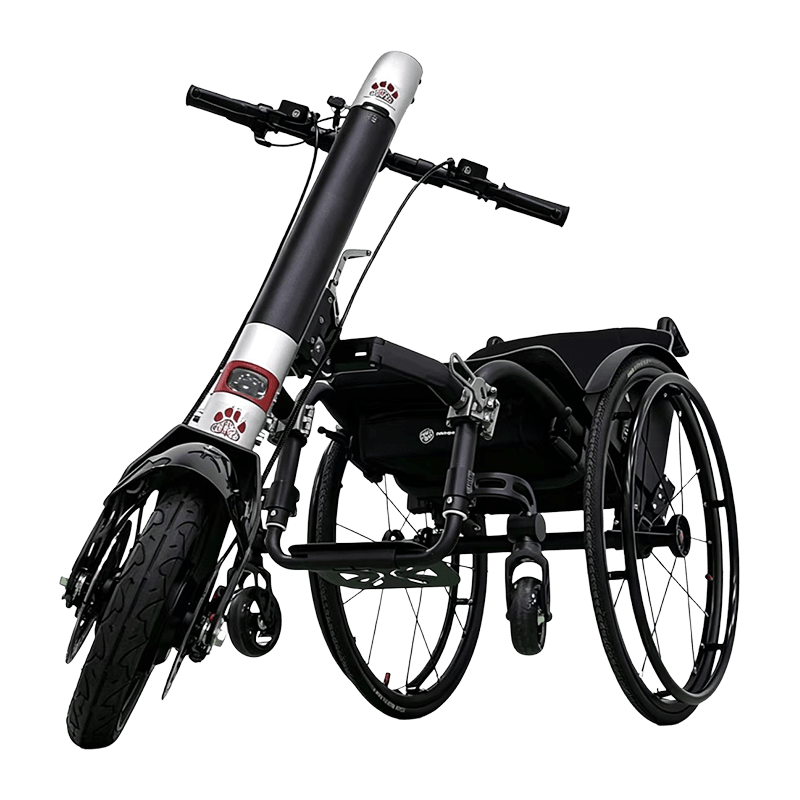
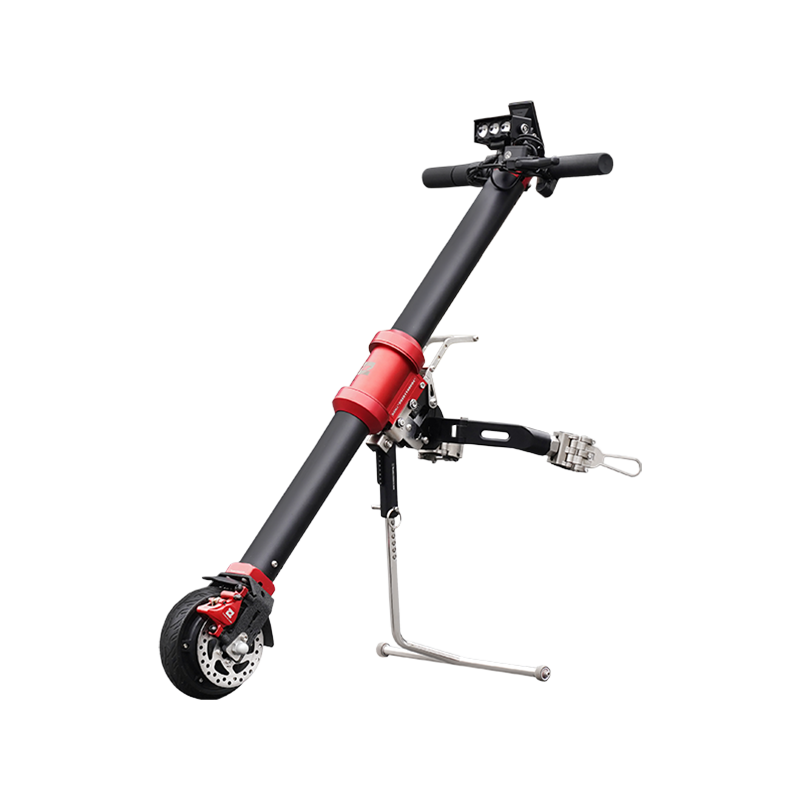
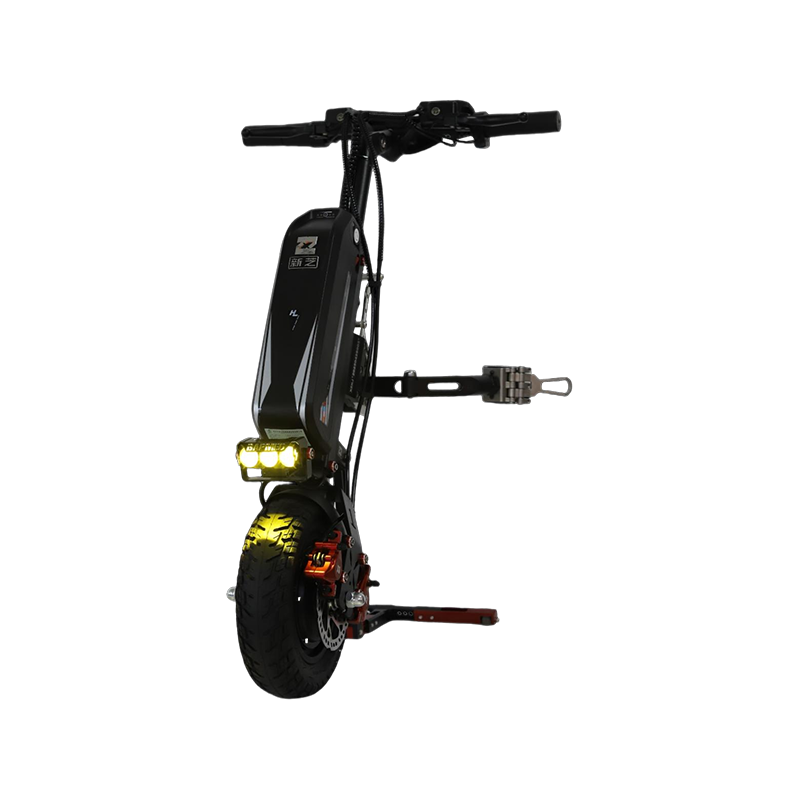
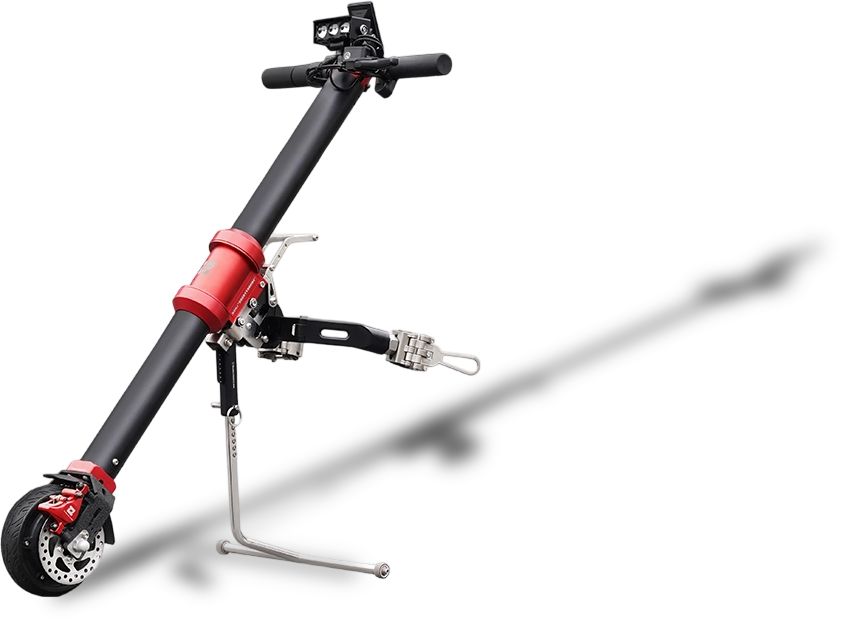
Caster fork trail and bearing quality decide whether the chair tracks straight or shimmies at speed, and a daily shimmy transmits into the frame for the whole life of the chair. If a front-mounted power attachment will ever be fitted, frame and fork ratings need checking at the specification stage, because an add-on applies loads a hand-pushed frame never sees.
 SlimTough Portable Electric Handcycle Attachment for WheelchairsConsider this quick-connect electric handcycle attachment for daily short-distance wheelchair mobility, with 36V battery options, brushless motor, and hydraulic disc brake.View Product →
Fasteners, Wear Parts, and the Failures That Actually Happen
Aluminum has no endurance limit, so a frame that survives 200,000 push cycles will not automatically survive 2 million. Cracks appear at a small number of points rather than in the middle of a tube, and those points repay regular inspection.
- Cross-brace pivot and folding mechanism
- Seat rail near the back post
- Camber tube clamps
- Caster fork stem and head tube
Fasteners are a maintenance item with a specification. M6 stainless bolts in aluminum clamps are commonly torqued to 8 to 10 Nm with a thread-locking compound; over-torquing crushes the tube, while under-torquing lets the clamp creep. Re-checking axle nuts and frame bolts after the first 100 km, then every few months, prevents most of the looseness that is later reported as a frame defect.
Finish, Corrosion, and the Working Environment
Anodizing at 10 to 25 microns and powder coating at 60 to 100 microns are the common finishes, and both fail the same way: a chip or scratch that exposes bare aluminum. Chloride from road salt, cleaning agents, and perspiration starts pitting, and any point where stainless hardware touches bare aluminum becomes a galvanic cell that consumes the aluminum side.
For winter or coastal use, specify sealed or isolated fasteners, touch up scratches promptly, and rinse the frame rather than scrubbing it. Corrosion rarely destroys a frame by itself, but the pits it leaves become the starting points for fatigue cracks.
Serviceability Decides the Real Cost of Ownership
The cheapest chair to own is not the cheapest to buy. Standard bearing sizes, replaceable caster forks, a 12 mm quick-release axle, and a published spare-part list decide whether a five-year-old chair is repaired in an afternoon or replaced. Modular design also protects the frame: when casters, tires, and upholstery are separate line items, they wear out instead of the frame, and the frame keeps its geometry.
Before ordering, ask for the price of a complete caster assembly, a set of tires, and a bearing kit. Those three figures reveal more about long-term cost than any headline discount.
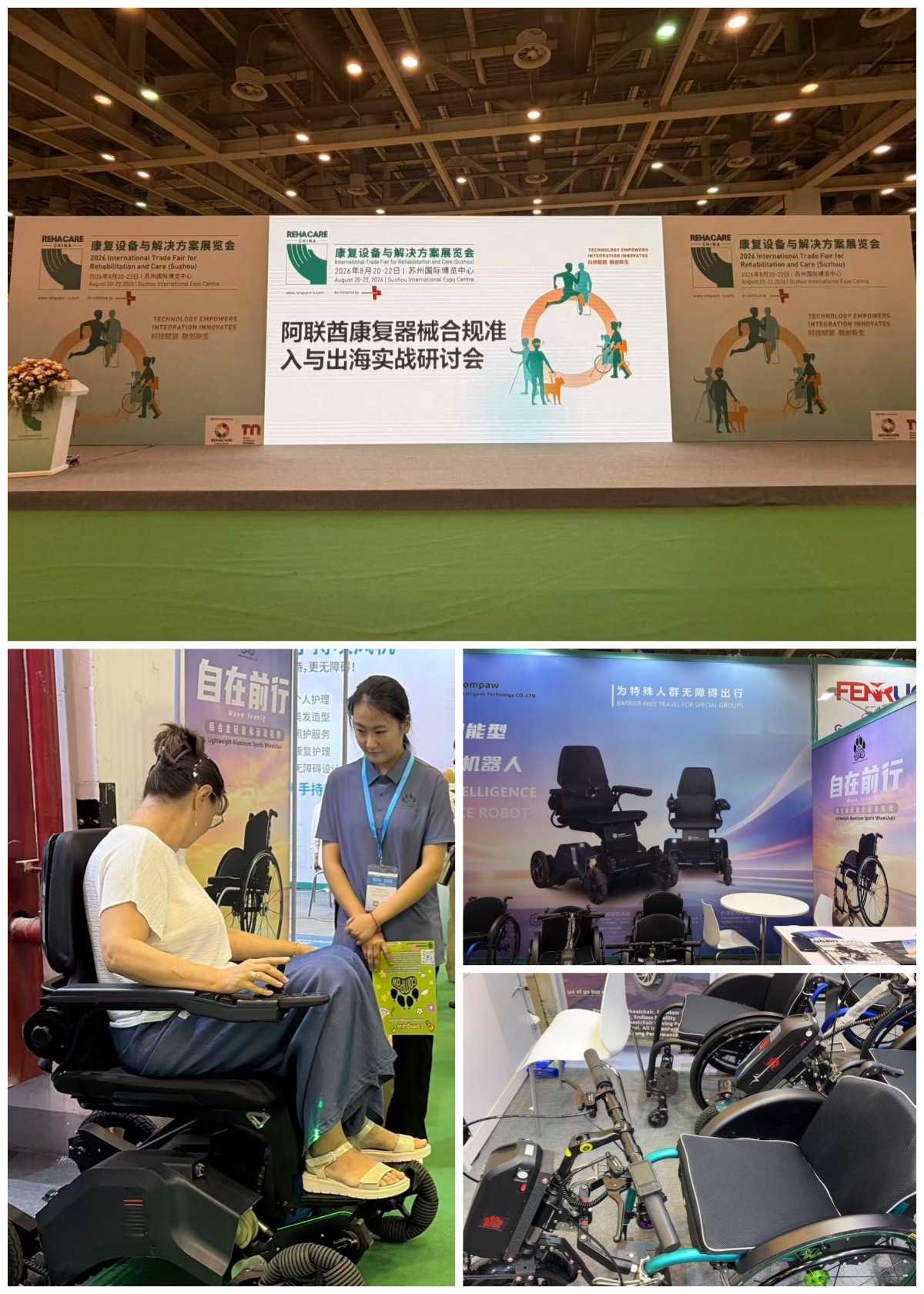 Custom Wheelchair Accessories and Electric Handcycle Attachment AccessoriesBrowse this category for wheelchair accessories and electric handcycle attachment accessories, where long-term cost checks can include caster assemblies, tires, and bearing kits.View Product →
A Specification Checklist for Buyers and Distributors
Put these items in writing and require a documented answer for each one.
- Alloy grade, wall thickness at the butt ends, and post-weld heat treatment
- Adjustment range covering seat depth, seat-to-floor height, front-to-rear height difference, and axle position
- Maximum user weight with the design safety factor stated
- Rear wheel and caster size, tire type, and bearing specification
- Fastener torque values and the recommended re-torque interval
- Finish type and thickness, with touch-up instructions
- Spare-parts list with prices for casters, tires, bearings, and upholstery
A manufacturer with its own production line can usually answer all seven items in a single document, and a factory visit or process review is worth more than a second round of price negotiation. Checking the full product range against the same list shows quickly which models are built for durability and which are built for a low shelf price.
None of these factors is exotic. Aluminum behaves predictably when tube walls, joints, axle position, wheels, and fasteners are specified together rather than one at a time, and unpredictably when low frame weight is treated as the only design goal. A chair that is 0.8 kg heavier but has reinforced joints, a correctly positioned axle, and a published spare-parts list is usually still in service when the lighter one has been retired.