Core Advantages
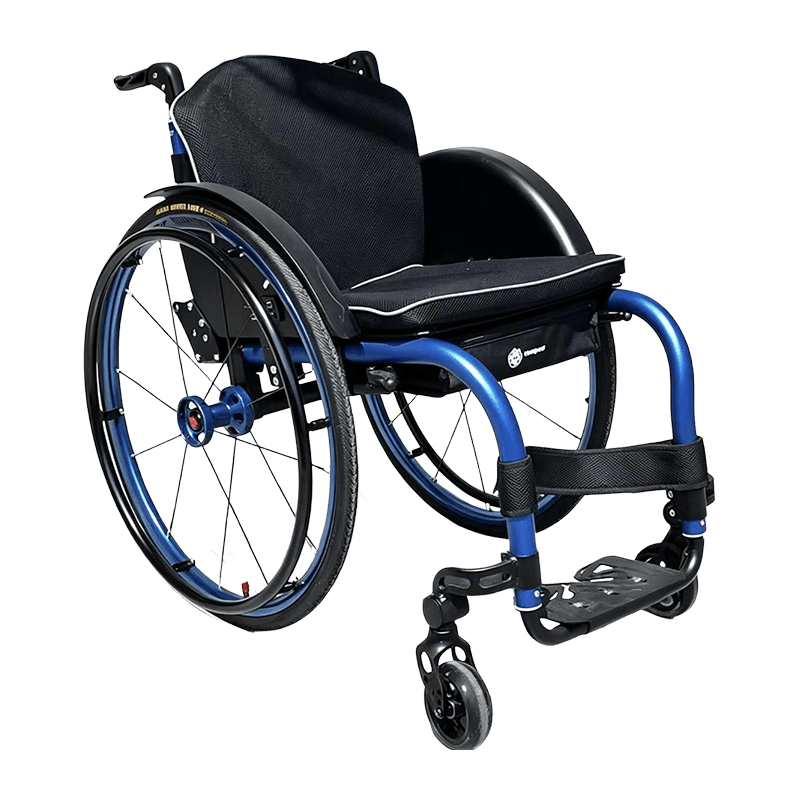
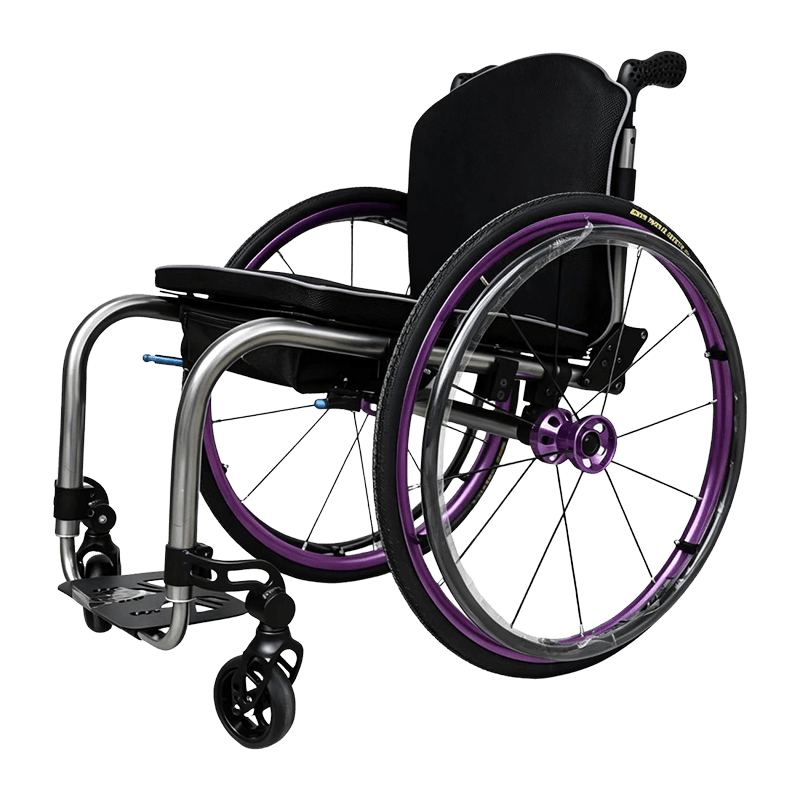
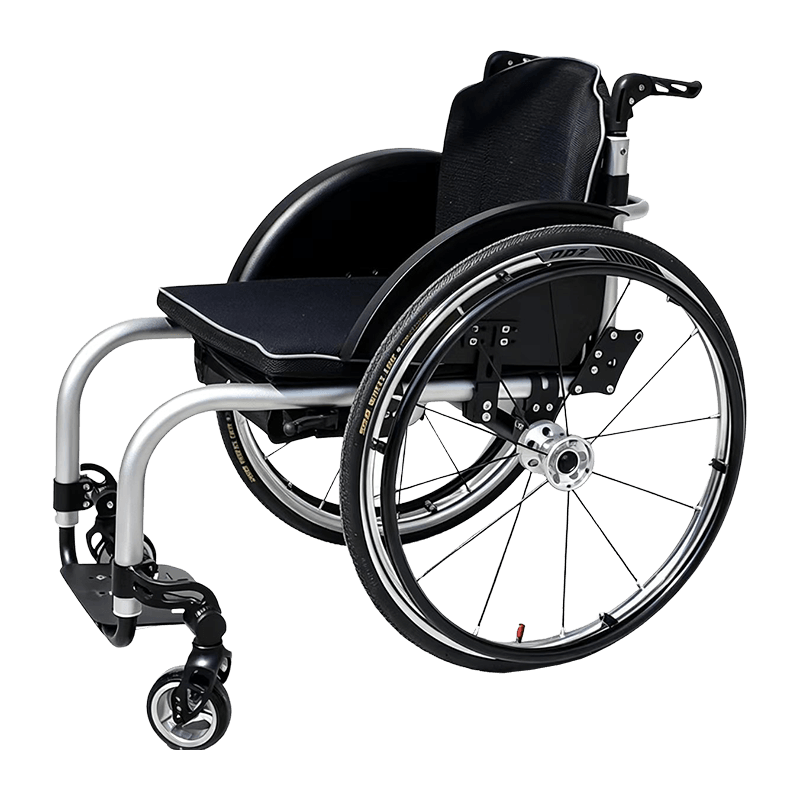
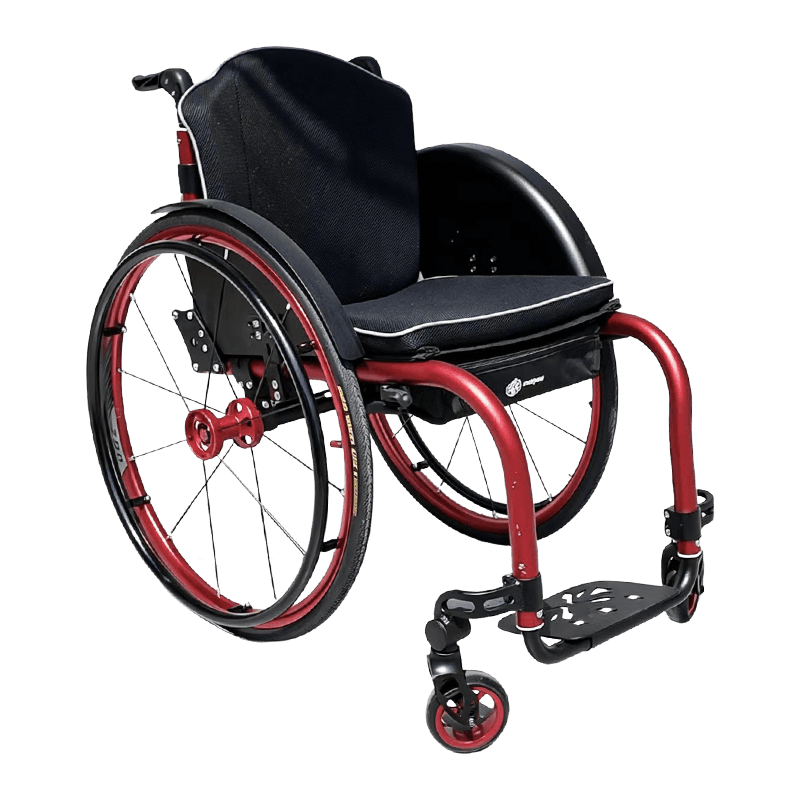
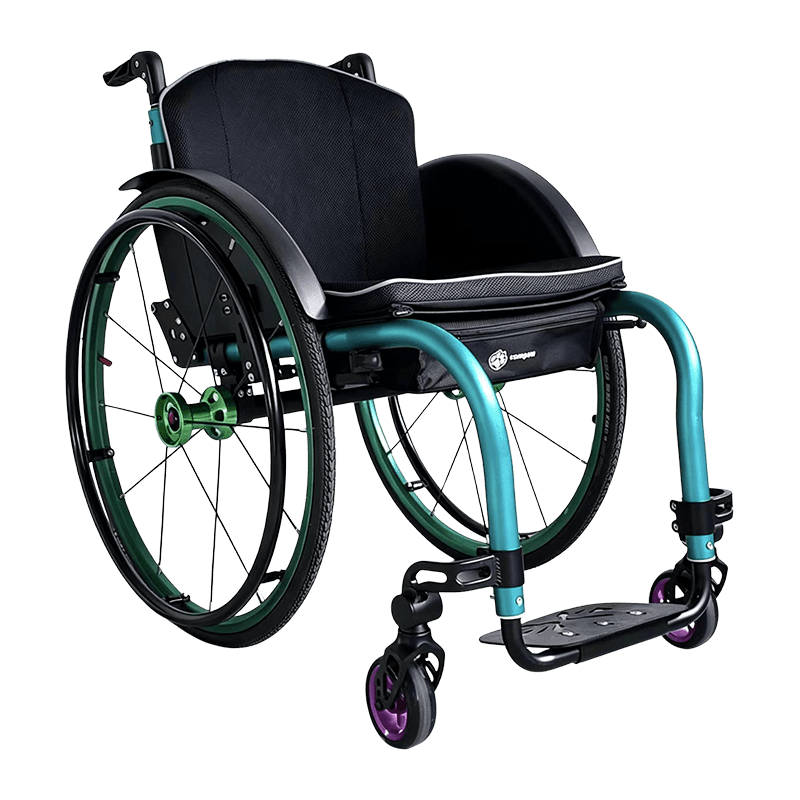
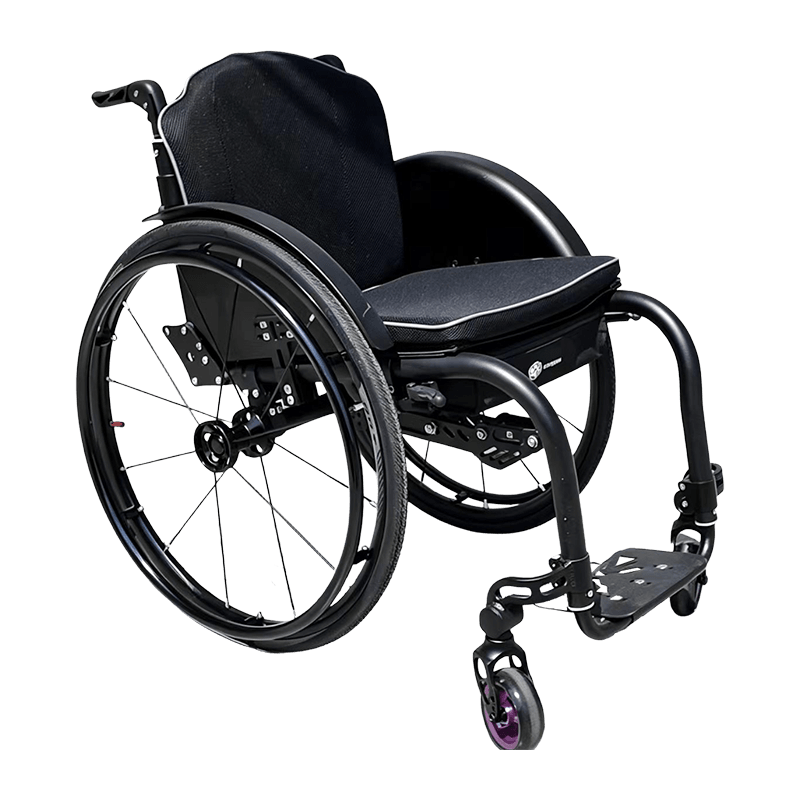
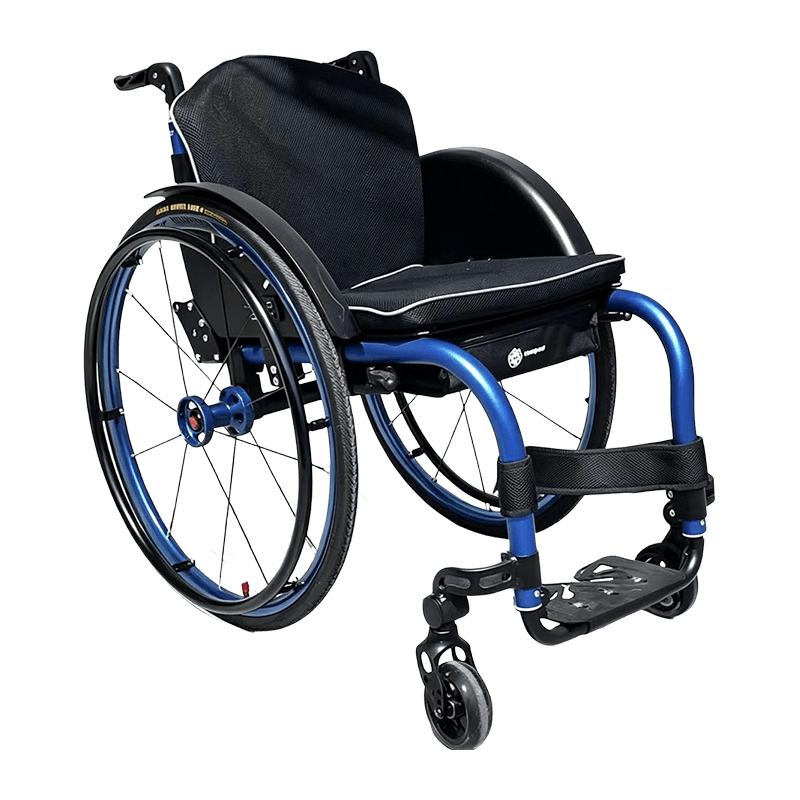
- Aluminum alloy frame: Uses aluminum alloy as the primary frame material to control overall wheelchair weight.
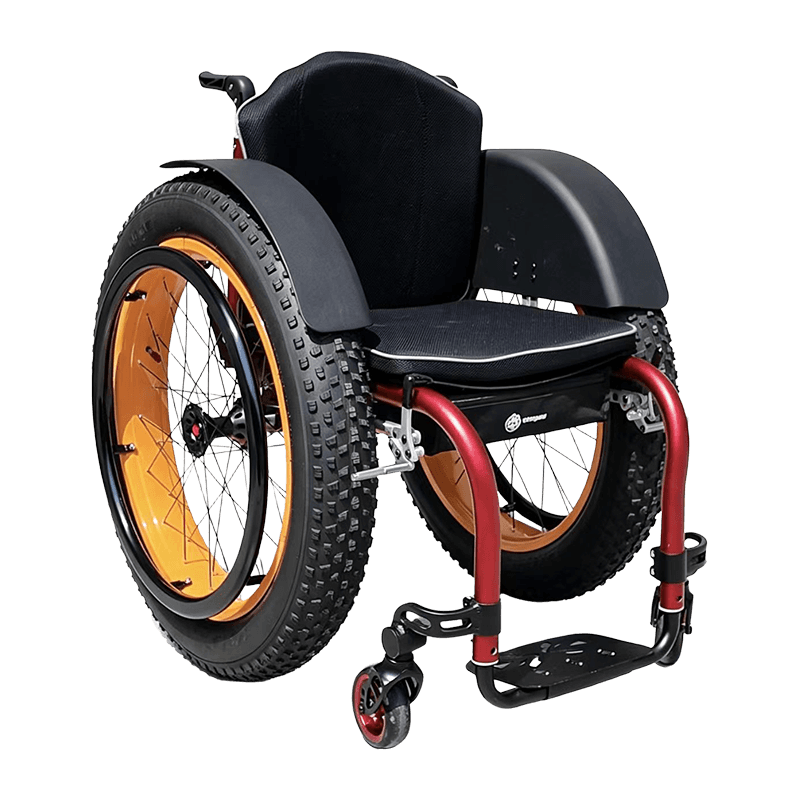
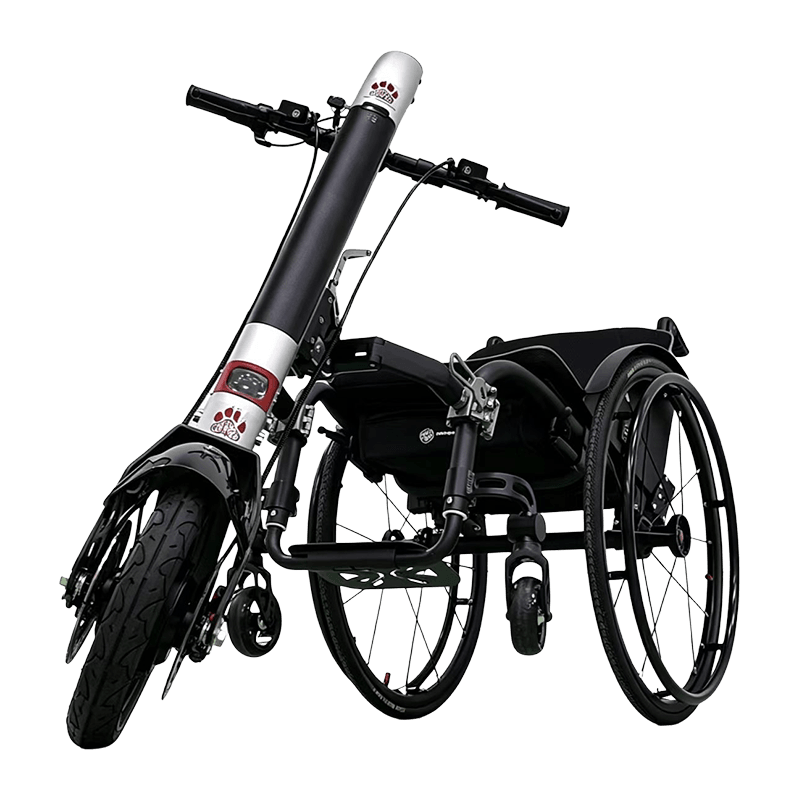
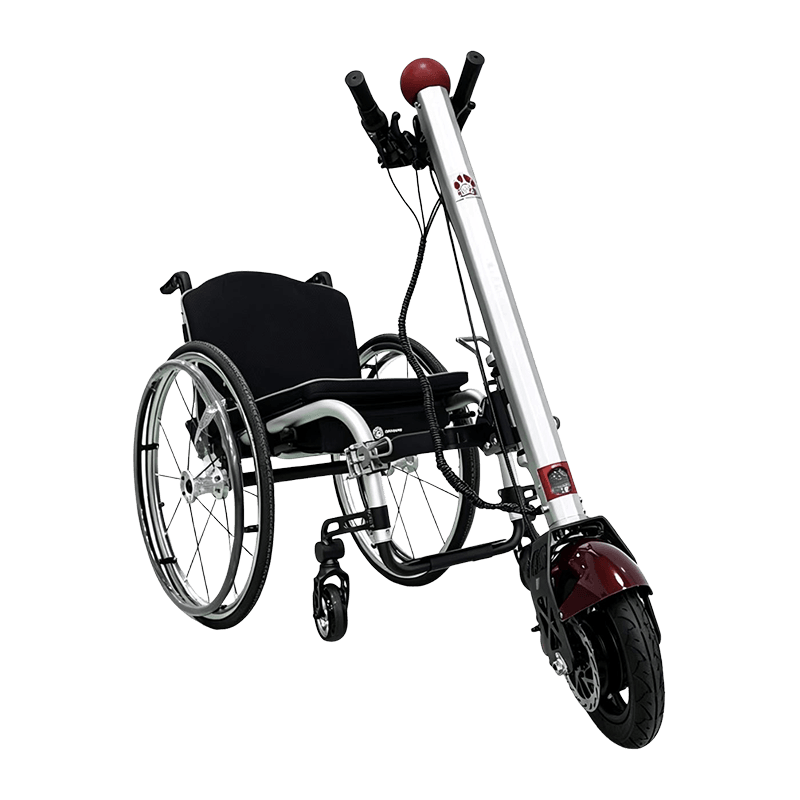
- Self-propelled rear-wheel design: Large rear wheels with handrims allow the user to manually propel and steer the wheelchair.
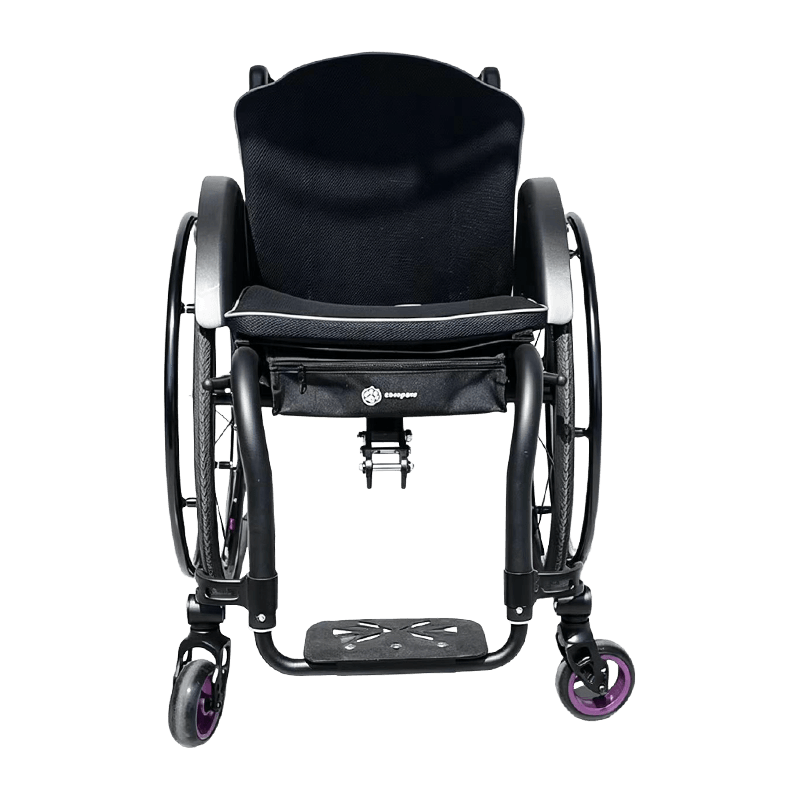
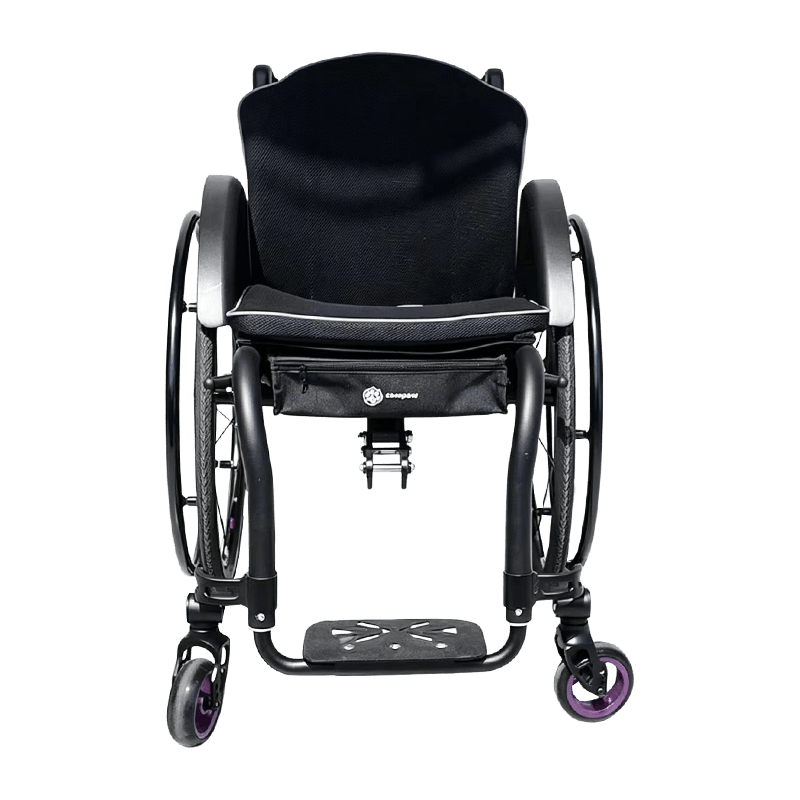
- Adjustable footrests: Foot-support position can be adjusted according to leg length and seating requirements.
- Attendant-assisted mobility: Rear push handles allow caregivers or attendants to move the wheelchair when required.
- Transport-oriented configuration: Depending on the design, a folding frame can be used to simplify storage, transportation, and institutional deployment.
- B2B configuration capability: Suitable for wheelchair manufacturing, rehabilitation equipment supply, healthcare procurement, and OEM/ODM projects.
Product Features
- Aluminum alloy wheelchair frame
- Manual self-propelled configuration
- Large rear wheels with handrims
- Adjustable footrests
- Manual speed and directional control
- Attendant push handles
- Configurable seat widths
- Adjustable footrest configuration
- Configurable rear-wheel and tire specifications
- Folding frame configuration according to project requirements
- OEM/ODM development support
- Suitable for bulk procurement and wheelchair system integration
Application Scenarios
1. Rehabilitation Equipment
The wheelchair can be used in rehabilitation centers, care facilities, and assisted mobility equipment applications where manual wheelchair operation is required for indoor or short-distance mobility.
2. Healthcare Facilities
It can be configured for hospitals, clinics, and other healthcare environments. The appropriate configuration can be determined according to usage frequency, available space, and whether the wheelchair is primarily self-propelled or attendant-operated.
3. Elderly Care and Nursing Facilities
The wheelchair is suitable for nursing homes, care centers, and other institutional environments. Seat and footrest configurations can be matched to different user dimensions and mobility requirements.
4. Daily Mobility Assistance
The wheelchair can be used in residential environments, indoor facilities, and designated accessible areas. The self-propelled rear-wheel configuration is intended for users who can operate the handrims with sufficient upper-body control.
5. OEM/ODM Projects
Wheelchair manufacturers and rehabilitation equipment companies can configure seat width, frame dimensions, footrests, rear wheels, armrests, and folding mechanisms according to target-market requirements and product development specifications.
Common Questions and Solutions
Q1: Why is an aluminum alloy frame used for a manual wheelchair?
An aluminum alloy frame can reduce the structural weight of the wheelchair while providing the support and connection structure required for the seating and mobility system. Actual wheelchair weight depends on frame dimensions, material specifications, and complete-vehicle configuration.
Q2: What is the difference between a self-propelled wheelchair and an attendant wheelchair?
A self-propelled wheelchair generally uses larger rear wheels with handrims, allowing the user to propel and steer the wheelchair directly. An attendant wheelchair is primarily designed to be pushed by a caregiver through rear push handles.
Q3: What can be adjusted on the footrests?
The adjustment method depends on the specific footrest structure. Common configurations may allow adjustment of footrest height, angle, or leg-support position. The required adjustment range should be confirmed according to the target user group.
Q4: Can the wheelchair be customized for OEM/ODM projects?
For OEM/ODM applications, configurations such as frame dimensions, seat width, footrest structure, tires, armrests, and folding mechanisms can be specified according to project requirements. The available customization range should be confirmed based on the selected frame design.
Q5: What specifications should be confirmed before bulk procurement?
Recommended specifications include seat width, seat depth, frame dimensions, wheelchair weight, maximum load, rear-wheel size, footrest configuration, folding dimensions, and intended operating environment.
Selection and Usage Considerations
- Select seat width and seat depth according to user dimensions.
- Confirm the footrest adjustment range according to leg length.
- Select tire configuration according to the intended operating environment.
- Confirm rear-wheel dimensions based on the user's self-propulsion requirements.
- Verify folded dimensions and packaging requirements for bulk transportation.
- Match the frame and seating system with the required load capacity.
- For OEM/ODM projects, conduct sample testing of frame fit, folding operation, and complete-wheelchair functionality before mass production.
- For international distribution, verify applicable wheelchair safety, mobility-equipment, and other regulatory requirements in the target market.
COMPAW is a comprehensive high-tech enterprise integrating R&D, production, and global trade of intelligent rehabilitation aids, accessible mobility devices, and smart home equipment.
With a manufacturing core built on 25 years of mature experience, we operate a 50,000㎡ modern factory, employ over 300 professionals, and maintain a 100‑ton production capacity. Over 70% of our products are exported worldwide, and our annual turnover exceeds 100 million RMB.
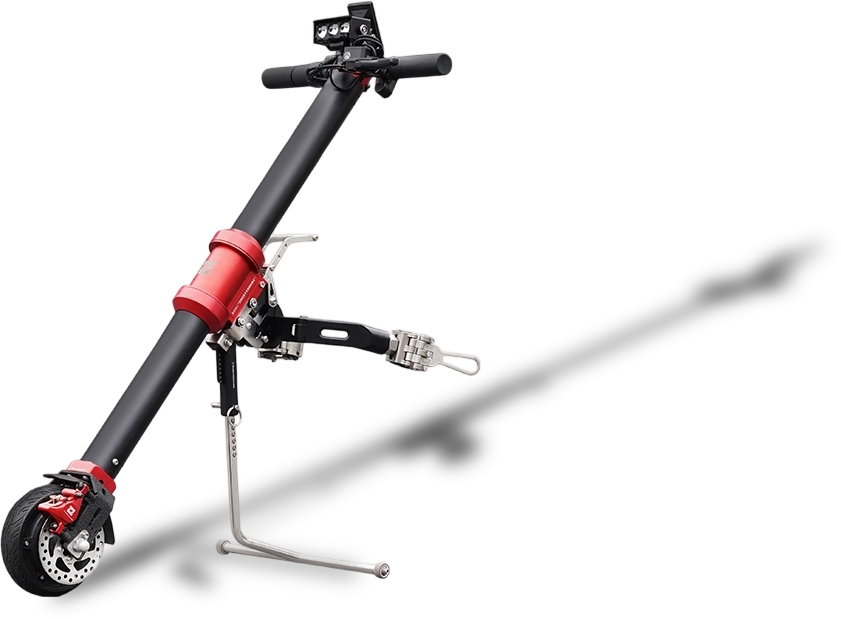
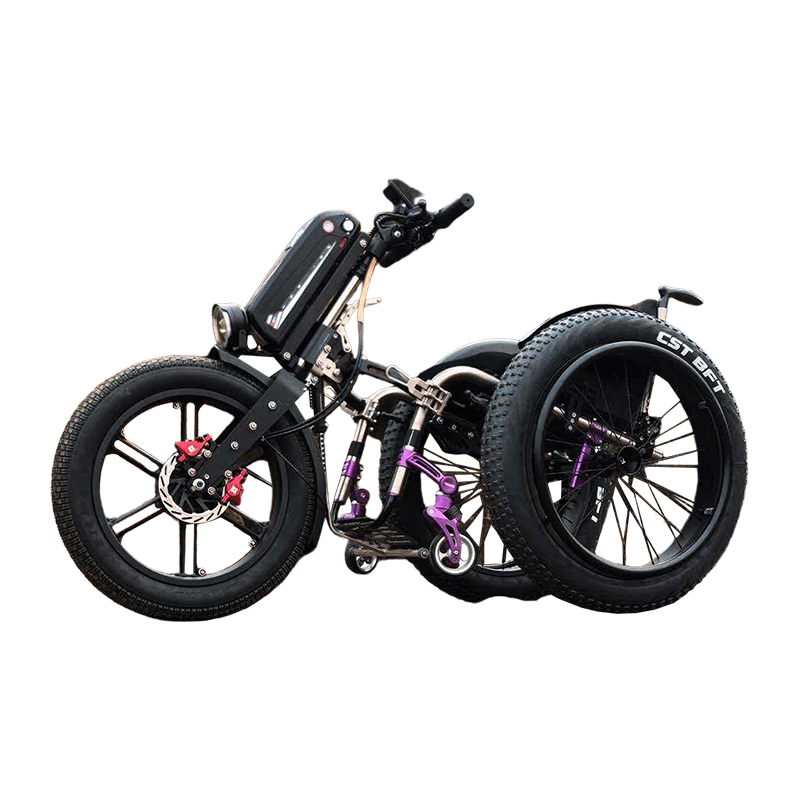
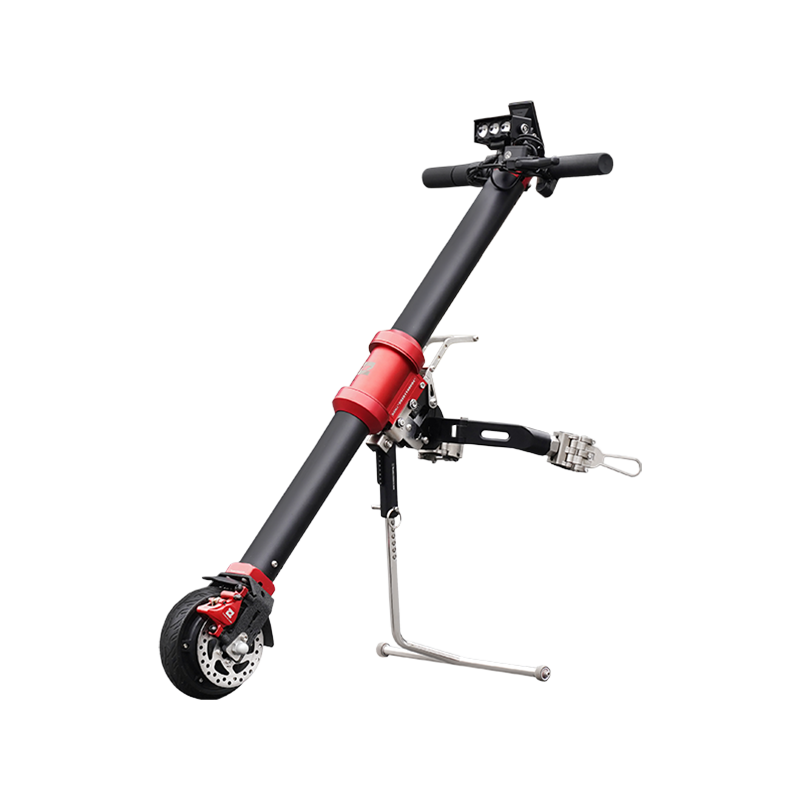
Centered on technological innovation, we offer a full‑range product matrix: SlimTough, NeoPath, Zepath, ProPath, and OmniPath wheelchair power assist heads; wheelchair stair‑climbing robots; automatic cooking robots; and multi‑functional wheelchairs.
We deliver one‑stop accessible mobility and smart home solutions to global customers, committed to enhancing the quality of life and work for people with reduced mobility, families, and commercial scenarios through intelligent technology.

 English
 русский
 Español
 Deutsch